Call for Participants – #Filming restarted for #ALMOST #Documentary – #Indigeneity & #GenderDiversity

Untitled

FILMING HAS RESTARTED FOR ALMOST! WE ARE ACTIVELY SEEKING PARTICIPANTS, SO PLEASE  APPLY AS SOON AS POSSIBLE.

ALMOST was first developed to be a short #documentary film with unique animated storytelling and live scenes, which it still will be, but additionally, I will create a #webseries where episodes feature participants who wish to further share their journey. Other components, such as the spider symbolism will also be explained further, as the web series will supplement and expand the main documentary’s themes and topics.

Description: Focusing on the intersection of realities, identities and Indigeneity, and the concept of being enough, no matter what or who you are.

“Almost normal.
Almost acceptable.
Almost Indigenous.

Half, a quarter, a fraction, a piece.
Gender, sexuality, ethnicity, cognitive or physical dis-/abilities.
Toxic beliefs, ableist and racist structures in society continue to harm.

Some are embracing their differences in order to heal…and they’re connecting.”

PARTICIPANTS WILL NEED TO BE:

1) Over the age of 18 at the time of filming
2) Be willing to sign an agreement for use of their likeness and footage in this project
3) Have an understanding Indigenous and original peoples exist across the world, including Europe, but priority will be given to those connected to or reconnecting to their cultures

Please view the trailer here or on Vimeo, and read through the information currently available on this website, such as the story, the spider and the director’s pages. Red Haircrow, who was awarded the 2023  Ma’’ingan Scholarship for their work as an early career psychologist in gender expansive support and research, has their personal website also, which can be found here https://redhaircrow.com/.

If you are interested in participating and/or have any questions, please follow the link to our posting and use our contact form. You are also welcome to share this call appropriately.
https://almostdocumentary.wordpress.com/2023/09/20/call-for-participants/

Current Projects & Cooperations

star wars

Find our projects of interest, or have ideas you think we might be interested in? Write us.

Now Available – “Varied Spirits -Anthology – Vol.1” on this #TransgenderDayOfVisibility

Cover Art 2 advert

back cover

Now available! Published on this, 31st March 2023, on the Transgender Day of Visibility, even as countries and governments like the USA continue to allow violent attacks, discrimination and organized oppression and legislation to destroy rights and lives.

Varied Spirits Anthology – Volume 1, in print or on Kindle. 50 pages, English.

Just like our documentary’s description: “The same mentality that ignores Indigenous rights to self-representation are often those who also stereotype and gaslight GLBTIIQ people, women (of all kinds), the disabled or economically challenged, especially people of color just for desiring change and equality. It is basically saying, “My gratification is more important than your dignity, your rights or even your life.” This is a main facet of rape culture. It is intersecting oppression.

 “Varied Spirits” is a poetry, prose and art collection focusing on writers, artists and creatives who identify as transgender, non-binary, gender non-conforming, gender-queer, trans-feminine, trans-masculine, or other self-identifying terms both ancient and historic, and Native/Indigenous persons who identify as Two-Spirit.

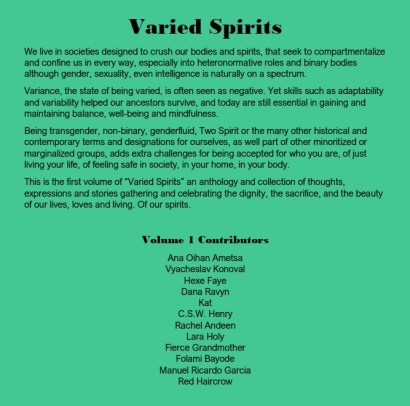
Description: “We live in societies designed to crush our bodies and spirits, that seek to compartmentalize and confine us in every way, especially into heteronormative roles and bodies although gender, sexuality, even intelligence are naturally on a spectrum.

Variance, the state of being varied, is often seen as negative. Yet skills such as adaptability and variability helped our ancestors survive, and today are essential in gaining and maintaining balance, well-being and mindfulness. Being trans and/or also part of other minoritized or marginalized groups adds extra challenges for being accepted as who you are, of just living your life, of feeling safe in society, in your home, in your body.”

This anthology is a gathering of the dignity, the sacrifice, and the beauty of our lives, loves and living. Of our spirits.”

Contributors include Ana Oihan Ametsa, Vyacheslav Konoval, Hexe Fey, Dana Ravyn, Kat, C.S.W. Henry, Rachel Andeen, Lara Holy, Folami Bayode and Fierce Grandmother, from the countries or unceded territories of the USA, Canada, Mexico, Ukraine, Germany, and the UK. Edited by Manuel Ricardo Garcia and Red Haircrow.

Length: 50 Pages
Format: Softcover on art paper
Art & Text: Color and Black/White
Size: 148 x 210 mm

Would you like a copy to review for your website, blog or organization? Contact us. 

Book Launch on 31 March – “Varied Spirits – An Anthology” on #Transgender Day of Visibility


Cover Art 2 Midsize

Varied Spirits – An Anthology – Volume 1
edited by Manuel Ricardo Garcia and Red Haircrow

Arriving 31 March 2023, and will be available in print & ebook,  which is open for pre-order.

Contributors include Ana Oihan Ametsa, Vyacheslav Konoval, Hexe Fey, Dana Ravyn, Kat, C.S.W. Henry, Rachel Andeen, Lara Holy, Folami Bayode and Fierce Grandmother.


Dedication: To all our transgender, non-binary, genderfluid, Two-Spirit relatives known and unknown, who have been natural, vital parts of families, communities and societies since the beginning of time, and who continue to support, nurture, build bridges, heal and love human beings.

Description: “We live in societies designed to crush our bodies and spirits, that seek to compartmentalize and confine us in every way, especially into heteronormative roles and bodies although gender, sexuality, even intelligence are naturally on a spectrum.

Variance, the state of being varied, is often seen as negative. Yet skills such as adaptability and variability helped our ancestors survive, and today are essential in gaining and maintaining balance, well-being and mindfulness. Being trans and/or also part of other minoritized or marginalized groups adds extra challenges for being accepted as who you are, of just living your life, of feeling safe in society, in your home, in your body.

This is the first volume of “Varied Spirits”, an anthology and collection of thoughts, expressions and stories gathering and celebrating the dignity, the sacrifice, and the beauty of our lives, loves and living. Of our spirits.”

Cover art by Folami Bayode, cover design by Red Haircrow. Published by Flying with Red Haircrow Productions.


And remember from the description of our documentary, “Forget Winnetou! Loving in the Wrong Way”, and as we’re seeing in society more and more each day: intolerance, ignorance, hatred, derision and verbal, violent and even deadly attacks on transgender people and GLBTIIQ deserves. Remember February’s offensive “cultural appropriation” Karneval floats that also had “rainbow” dressed “Indians” tied up as if being sacrificed?

“The same mentality that ignores Indigenous rights to self-representation are often those who also stereotype and gaslight GLBTIIQ people, women of all kinds, the disabled or economically challenged, especially people of color just for desiring change and equality. It is basically saying, “My gratification is more important than your dignity, your rights or even your life.” This is a main facet of rape culture. It is intersecting oppression.”

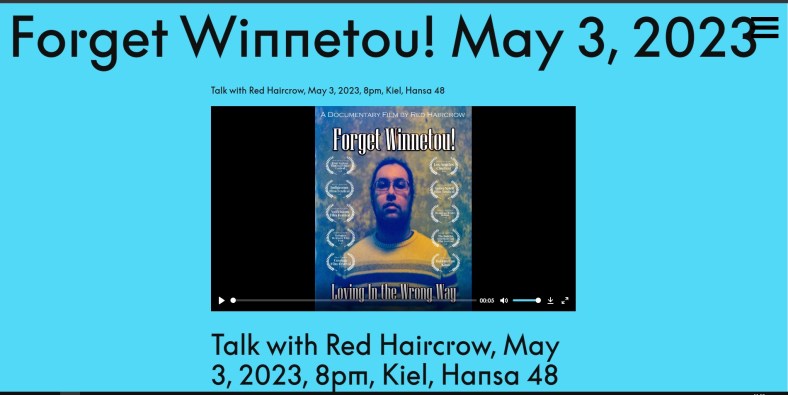
3 May 2023 in Kiel – In cooperation with Culturitical

23Talk with Red Haircrow, May 3, 2023, 8pm, Kiel, Hansa 48

Culturitical

“Award-winning writer, educator, psychologist and filmmaker D.S. Red Haircrow joins us to critically discuss how Germans are loving Native Americans the wrong way, inter-generational historic trauma of marginalized and minoritized groups and GLBTIIQ needs. The entry is free.”

You are welcome to read all details at this link, please contact them directly with questions about the venue and group.

Racism as Culture: Carnival Costumes, #CulturalAppropriation & #Germany – #Faschingskostüme #KulturelleAneignung

mdr2

VIDEO – This week on (link) MDR’s “recap” – Faschingskostüme: Ist Rassismus vielen egal? Myself and several others on the topic of racism, cultural appropriation, carnival, rassimus, Faschingskostüme, Kulturelle Aneignung.

We ask: How do you educate upon these topics in meaningful ways and create change to end racist practices? Like the title of our documentary clearly suggests, there is a wrong and a better way to show appreciation, indicate interest or learn about other peoples and cultures that do not perpetuate cycles of erasure, violence, and misogyny (+transphobia). Learn more here: flyingwithredhaircrow.com.

Description: “Finally #Carnival again! That means celebrating exuberantly, swaying, dressing up. But apparently, this year, too, that doesn’t go without missteps. At a carnival reception in Hesse, there is a “blackfacing” scandal. In Prossen, Saxony, people in “Indian” #costumes drive through town during a carnival parade, and a man in a rainbow suit is tied to a torture stake. And we ask ourselves: why are certain costumes problematic?

For this, we take a look at history, more precisely at the time of colonialism. At that time, many ethnic groups were oppressed and considered inferior. Their clothing and culture were looked down upon. Today, for example, dressing up as #NativeAmerican without dealing with their history is unacceptable, Red Haircrow tells us in the video.

And yet, “Ind*aner” costumes are still everywhere. Many fools don’t understand the fuss over the disguise. Do many not care about #racism? We asked academics and those affected for their take.”

Note: By the way, I was addressed by MDR in English and never asked if I speak German. Which of course I do, I was born in Germany and have spent the last almost twenty years back in Germany. Another example that one can recognize the problems of stereotyping, but still make false assumptions about other things that interfere with intercultural well-being.


Wir fragen: Wie kann man auf sinnvolle Weise über diese Themen aufklären und Veränderungen bewirken, um rassistische Praktiken zu beenden? Wie der Titel unseres Dokumentarfilms deutlich macht, gibt es einen falschen und einen besseren Weg, Wertschätzung zu zeigen, Interesse zu bekunden oder etwas über andere Menschen und Kulturen zu lernen, ohne den Kreislauf von Auslöschung, Gewalt und Frauen- oder transfeindlichkeit aufrechtzuerhalten. Erfahren Sie hier mehr: flyingwithredhaircrow.com.


Beschreibung: “Endlich wieder Karneval! Das heißt ausgelassen feiern, schunkeln, verkleiden. Aber offenbar geht das auch in diesem Jahr nicht ohne Fehltritte. Bei einem Fastnachtsempfang in Hessen gibt es einen “Blackfacing”-Skandal. Im sächsischen Prossen fahren Menschen im “Indianer”-Kostüm bei einem Karnevalsumzug durch den Ort, ein Mann in Regenbogen-Anzug ist an einen Marterpfahl gefesselt.Und wir fragen uns: Warum sind bestimmte Kostüme problematisch?

Wir werfen dafür einen Blick in die Geschichte, genauer gesagt in die Zeit des Kolonialismus. Damals wurden viele Volksgruppen unterdrückt und als minderwertig betrachtet. Auf ihre Kleidung und Kultur wurde herabgeschaut. Sich heutzutage zum Beispiel als Native American zu verkleiden, ohne sich mit ihrer Geschichte zu beschäftigen, sei inakzeptabel, erklärt uns Red Haircrow im Video.

Und doch sind “Ind*aner”-Kostüme nach wie vor überall zu sehen. Viele Narren verstehen die Aufregung um die Verkleidung nicht. Ist Rassismus vielen egal? Wir haben Wissenschaftler und Betroffene nach ihrer Einschätzung gefragt.”


Kapitel:
00:00 Intro
00:45 Wo gibt es Rassismus im Karneval?
02:35 Krasse Kostüme in Onlineshops
03:27 Was macht die Kostüme problematisch?
04:36 Kulturelle Aneignung im Karneval
06:42 Warum werden rassistische Kostüme trotzdem getragen
07:18 Hat Karneval ein Rassismusproblem?
08:00 Kostümverbot für Kinder?
09:50 Sarahs Meinung
10:34 Endcard

HINWEIS: Übrigens wurde ich vom MDR auf Englisch angesprochen und nie gefragt, ob ich Deutsch spreche. Was ich natürlich tue, ich bin in Deutschland geboren und habe die letzten fast zwanzig Jahre wieder in Deutschland verbracht. Ein weiteres Beispiel, man kann die Probleme der Stereotypisierung erkennen, aber trotzdem falsche Annahmen über andere Dinge machen, die das Wohlbefinden stören.

Very relevant to #Germany, Current Racism & Native American Stereotypes – “How the US influenced the creation of Nazi race laws under Hitler” – A New Article

Sharing commentary by Ken Pope, on the new article by Robin Lindley in the American Bar Association’s ABA Journal: “How the US influenced the creation of Nazi race laws under Hitler”. 

My comments: “IT IS EXTREMELY RELEVANT to continuing conversations, discussions and so-called “debates” on Native American stereotypes, cultural appropriation and misuse/abuse of Native cultures, spirituality, histories and peoples and the reality of “well-intentioned” support of Natives, but which still results in erasure, replacement and silencing of Natives by speaking for them instead of letting them speak for themselves. 

It’s also very relevant to the normalized and increasing daily racism, xenophobia, ableism etc. and apathy in Germany towards stereotyping/ignorance, discrimination and bias towards any marginalized and/or minoritized peoples and groups. Absolutely the history of Nazism has been taught in Germany, but the underlying reasons racism and racist practices are still not understood as such is a huge problem. Obviously the education has been flawed and/or one-dimensional, which many believe is because POC are routinely excluded as educators at all levels of schooling and academia.”

 
Excerpts:


GettyImages-Hitler
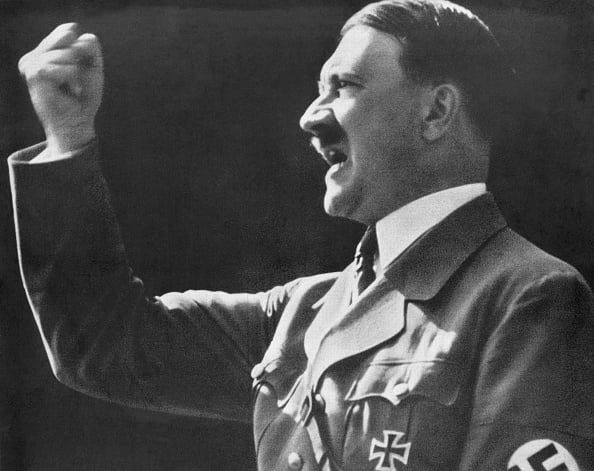
Adolf Hitler raises a defiant, clenched fist during a speech. 
 
“Adolf Hitler and his Nazi followers in the 1930s fashioned race laws that were designed to degrade and deprive Jewish people of all rights. At the same time, American laws often enshrined white supremacy and discriminated against non-whites, and Black Americans in particular were treated as second-class citizens.
 
Prompted by Hitler’s own words in his hateful screed Mein Kampf, celebrated Yale professor of law and history James Q. Whitman conducted meticulous research to determine the influence of American sources on Nazi jurists and scholars in the early years of Hitler’s reich. In in his groundbreaking and disquieting book Hitler’s American Model: The United States and the Making of Nazi Race Law (Princeton University Press), Whitman found that the Nazis had carefully studied American racial law and social policies in developing Germany’s antisemitic Nuremberg Laws of 1935 and other policies.
 
As Whitman reveals, Hitler saw the United States as the world leader in establishing a racist social order. 
 
Hitler and Nazi lawyers admired racist U.S. immigration laws; criminal laws forbidding mixed marriages or sexual relations; and Jim Crow segregation laws and other provisions that robbed African Americans of rights. And they especially admired the mass extermination of Native Americans by “Nordic” pioneers.


Hitler believed that the U.S. saw itself as ‘a Nordic German country’

Many Americans also did. Although, all of this is but one side, the nightmare side of the American story, and the Nazis were aware of that too. They were often puzzled by the competing currents in American political lives, some of which looked very much like the Nazi currents that they owed allegiance to, and some of which looked entirely incompatible with Nazi ideals.

American infatuation with eugenics influenced the Nazis

Race law is not just about eugenics, but it’s also about creating social hierarchies and humiliating people and developing notions of second-class citizen status and all those sorts of things. But what made the United States such an interesting model to a regime like the Nazi regime was that the Americans were really unembarrassedly interested in passing laws on these topics and spent a lot of time developing legal doctrines that could be used not only to the ends of creating a eugenically healthy population … but also to develop hierarchical laws.
 
And there’s the famous line from Supreme Court Justice Oliver Wendell Holmes: “three generations of imbeciles are enough” … from the Supreme Court [Buck v. Bell (1927)] in a case upholding a sterilization law. It’s important to emphasize, even though everything about American eugenics looks pretty ugly to me, that doesn’t mean that we got as ugly as the Nazis did with regard to extermination. When we read what Hitler had to say in particular, and other Nazis, the model for extermination policies in Eastern Europe didn’t have to do with eugenics as such. It had to do with the American conquest of the West in particular.

Hitler admired the mass extermination of millions of Native Americans

He did indeed. And, of course, the U.S. looked like a model for a German like Hitler because … Germany should be spreading east in the way the Americans spread west, and they should be at a minimum, displacing and possibly eliminating the local populations, as they did it.
 
If I may emphasize it, [the Native American genocide] was a more attractive model … [than the Armenian genocide] to the extent that the U.S. had made itself the dominant superpower in the world, and that’s what Hitler wanted for Germany as well. Being a Nazi, like other Nazis, and like other hard right-wingers, in trying to explain America’s tremendous geopolitical success, Hitler ascribed it naturally to American racism.

United States leadership in racist immigration laws

The laws in the early 20th century in particular were Hitler’s special focus in Mein Kampf. These were not expressly racist. … Instead, the laws introduced national quotas. There were earlier laws that directly and expressly targeted Asian immigrants. 
 
But these 20th century laws created national quotas with the open intent of keeping out the wrong kind of people—those who didn’t fit the Nordic ideal.

Nazis focused on Jim Crow laws and second-class citizenship

I must emphasize one thing that’s important to note is that the Nazis were not only interested in Jim Crow laws, but … the entire suite of American race practices. Some American laws targeted Asians, and some of them, of course, targeted Native Americans, and there was a whole lot there.
 
But with regard to second-class citizenship, the Americans faced the problem that the 14th amendment makes it clear that you can’t deprive someone of citizenship and, as a result, the American creation of the second-class citizenship of the kind where you’re depriving someone of voting rights and the like had to be done through subterfuges. And it was done very effectively through subterfuges, but the Nazis didn’t feel the need for subterfuges themselves. [They] were entirely open about the creation of second-class citizenship for Jews especially.

Nazis admired American laws criminalizing miscegenation

It’s astounding. And those laws were expressly racist and directly served as inspirations for Nazi legislation. And we know this in particular because of one of the most telling bits of archival evidence I found was the transcript of a meeting in the summer of 1934 in which the Nazis discussed what sort of criminal law they should create in order to bring the new Nazi order into existence. And there, they specifically studied American laws and particularly American anti-miscegenation laws. The desire of the most radical Nazi was to criminalize mixed marriage, and America offered not only a model but pretty much the only model in the world for doing that, and some of the penalties were extraordinarily tough.
 

The Nazis found U.S. law on race and Black people sometimes too harsh

That was a shocking discovery on my part. Some states, not by any means all, defined any person as Black if that person had even one drop of Black blood, which meant looking to any Black ancestor at all, however far back, who was Black. Other states had less far-reaching definitions, such as having one Black grandparent or something like that, but every single American definition went beyond what the Nazis themselves ever embraced. When Nazis discussed the far-reaching notorious American one-drop rule, they said things that you would never imagine hearing from a Nazi, such as, “That’s completely inhumane. How could you do that?”
 

On U.S. democracy and ongoing racism, antisemitism and xenophobia

In my view, we must recognize what happened in Germany and understand how intriguing Germans found the American example as ways of reminding us of the basic, really terrifying truth that it can happen here. … And, one hope is that there are foundations to American liberal culture that are ultimately unshakeable. … I wouldn’t claim to predict the future, but the history certainly can bring home to us the full and uncomfortable range of possibilities in making a human society.”


On #NativeMascots, Harry Potter Games & Transgender Violence

AS TRUE AS EVER:

“The same mentality that ignores Indigenous rights to self-representation are often those who also stereotype and gaslight GLBTIIQ people, women (of all kinds), the disabled or economically challenged, especially people of color just for desiring change and equality. It is basically saying, ‘My gratification is more important than your dignity, your rights or even your life.’ This is a main facet of rape culture. It is intersecting oppression.”

This is from the description of our documentary on racism, white supremacist ideology and cultural appropriation that uses as an object lesson the stereotyping of Native peoples, cultures, histories and traditions in Germany. “Forget Winnetou! Loving in the Wrong Way.” https://forgetwinnetou.com/.

transblur

We see this with the persistent and willful use of Native mascots by teams like the Kansas City Ch*efs, and the support of R*wling or anyone who perpetuates and uses anti-Semitic, racist, and misogynistic stereotypes in their work or words, and/or who advocates transphobia and hatred under the privileged and extremely twisted and misleading claim of feminism.

The same type of people and demographic who whine and rage about cancel culture, politic correctness and having their “culture” taken away, besides admitting their “cultures” are sexist, racist and/or hatemongering in the first place, they are centering and comparing their privileged lives to those widely vilified, discriminated against, treated with violence or killed simply for daring to exist and live their lives.

The latest article by Kristina Kielblock at kino.de details the timeline of R*wling’s transphobia and hatemongering, while also examining her work’s history of anti-Semitism, racism and stereotyping. It’s in German but a simple click in your browser can translate it to most other languages.

J.K. Rowling und die Trans*Community: Wo ist das Problem?

Inhaltsverzeichnis

While it’s anyone’s choice to play the new HP game or watch and cheer on their favorite sports team, real human beings who care for others, for human rights, for anti-discrimination etc. would not show support through apathy OR by ignoring the sexism, racism, misogyny and hatemongering by their actions or words, blithely claiming it’s “no big deal” or “doesn’t really doesn’t matter.” Whether they wish it or not, whether they think so or not, their participation WILL BE USED by the racists, the sexists, the misogynists and transphobes to further perpetrate acts of violence, discrimination and cruelty to marginalized and minoritized groups and peoples.

Remember: whenever Native Americans, transgender people and allies, or anyone dare to speak up against the violence, misrepresentation and discrimination they face, greater attacks and aggression are ALWAYS the result. So more clearly than ever, if you are not part of the solution, you ARE part of the problem. If you remain silent, you join the oppressor.

Demonstrations will be taking place across the USA and in cities in Europe as well, against the use of Native mascots. As also included in our documentary, the American Psychological Association’s research clearly substantiated the use of Native mascots, cariactures, personalities and stereotypes is a contemporary form of Racism and harmful to ALL. 

no mascotsImage shared from the nomorenativemascots.org website.
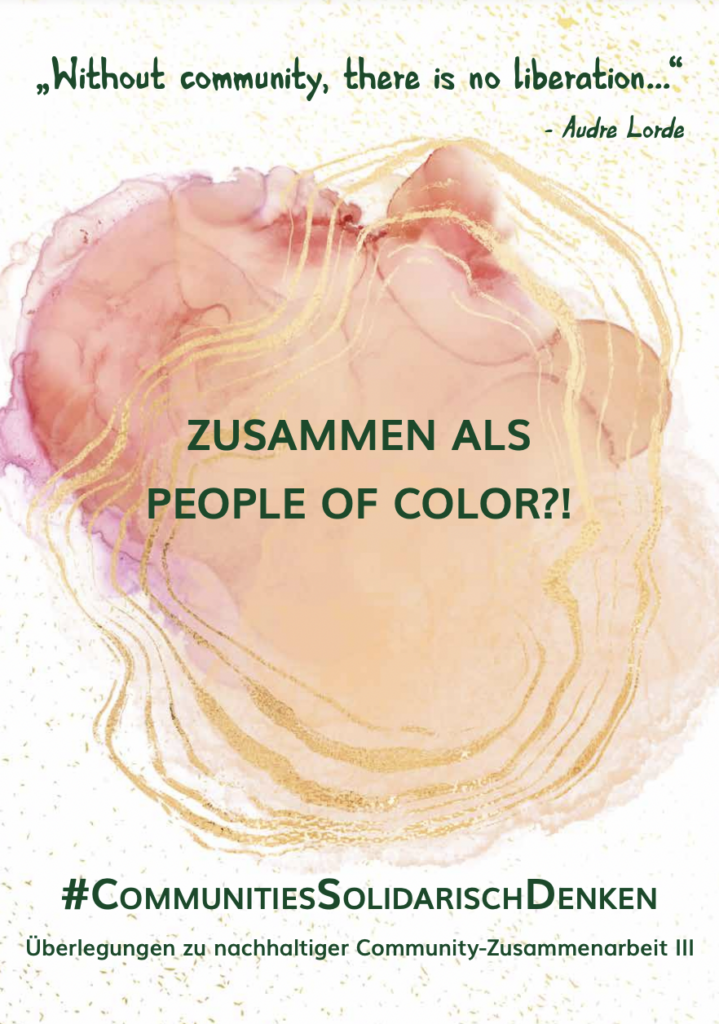
Now Available – “Zusammen als People of Color?!” the 2022 brochure for #CommunitiesSolidarischDenken via xart splitta (In German)

Bildschirmfoto-2022-12-06-um-12.08.44-719x1024

My essay “Terming Us into New Obscurity” was included, with perspectives on the usage and evolution/deevolution of the terms BIPOC and POC. My contribution and the brochure is in German. 

Shared from the xart splitta website:

“#CommunitiesSolidarischDenken ist nun im dritten Jahr einer der thematischen Schwerpunkte bei xart splitta. Wir haben über Solidaritäten gesprochen, geschrieben und uns ausgetauscht – über gute und schlechte, gescheiterte und gelungene, schwierige und einfache, Solidaritäten, aufgrund von Gemeinsamkeiten oder trotz Differenzen. Ziel ist hier der Versuch, community-übergreifend zu
arbeiten und dabei bewusst Community-Verbindungen zu schaffen. Dazu gehört, Unterschiede und Gemeinsamkeiten in unseren Communitys zu thematisieren, um dadurch Handlungsstrategien
für community-übergreifende Zusammenarbeit und Solidaritäten (weiter) zu entwickeln und zu stärken.


Doch wen bezieht diese Solidarität mit ein? Wer zeigt sich hier solidarisch mit wem? Es ist sicherlich kein Geheimnis, dass diese Communitys mehrheitlich (intersektionale) BIPoC-Communitys sind. Mit unseren Forderungen von 2021 im Gepäck ist es nun an der Zeit, sich tatsächlich mit den Basics auseinanderzusetzen.

Dies haben wir wieder für euch in unserer Broschüre #CommunitiesSolidarischDenken – Überlegungen zu nachhaltiger Community-Zusammenarbeit III mit dem Titel “Zusammen als People of Color?!” zusammengefasst, welche hier als download verfügbar ist.

Wenn ihr eine Print-Version haben möchtest kontaktiert uns unter contact@xartsplitta.net.

3rd Annual Acknowledging #Indigenous Peoples Day – Event on 24 Nov 2022

3rd

On 24 November 2022, at the 3rd annual *Acknowledging #Indigenous Peoples Day* worldwide, I’ll be sharing my essay, “When I Think About America” and “Threatened by Beads”. My perspectives as a BIPOC person on history: past, present and future, both personal and societal. 

Description: “We are meaningfully appreciating wisdom from Native and Indigenous scholars and artists through music, indigenous stories, poetry, meditation, healing silence, and connection.”

In cooperation with AML Lab • Omnigi Research. http://omnigi.com.