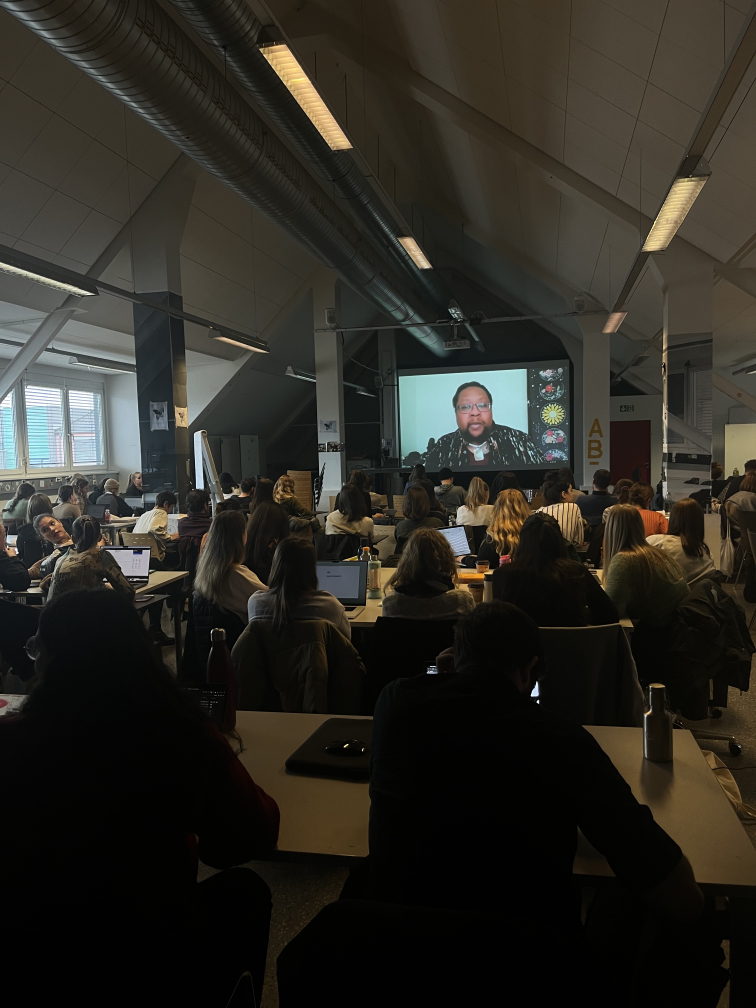
A huge thanks to Birgit Bachler and participating students at FH JOANNEUM University of Applied Sciences in Graz, Austria for the invitation to speak yesterday, 10 November, in their lecture series, Beyond the Bubble.
It was an opportunity to share different perspectives, realities & insights cross- and interculturally showing in educational, hands-on ways Natives/Indigenous persons are more than “bubblefied” stereotypes.
That we can, do & even excel in many different fields, disciples, and have a variety of interests and skills. We can and often do talk about, enjoy & do things that are not directly Euro-assigned “Native/Indigenous” things. That practice is in itself stereotyping, limiting, compartmentalization.
My Title: Beyond the Bubble – The Need for Variance. “Recognizing and fulfilling the needs of adaptability and variance in harm free ways.”
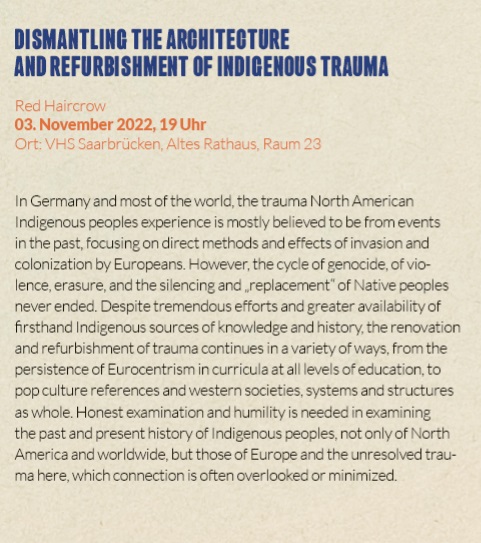
“In Germany and most of the world, the trauma North American Indigenous peoples experience is mostly believed to be from events in the past, focusing on direct methods and effects of invasion and colonization by Europeans. However, the cycle of genocide, of violence, erasure, and the silencing and „replacement“ of Native peoples never ended.
Despite tremendous efforts and greater availability of firsthand Indigenous sources of knowledge and history, the renovation and refurbishment of trauma continues in a variety of ways, from the persistence of Eurocentrism in curricula at all levels of education, to pop culture references and western societies, systems and structures as whole. Honest examination and humility is needed in examining the past and present history of Indigenous peoples, not only of North America and worldwide, but those of Europe and the unresolved trauma here, which connection is often overlooked or minimized.”
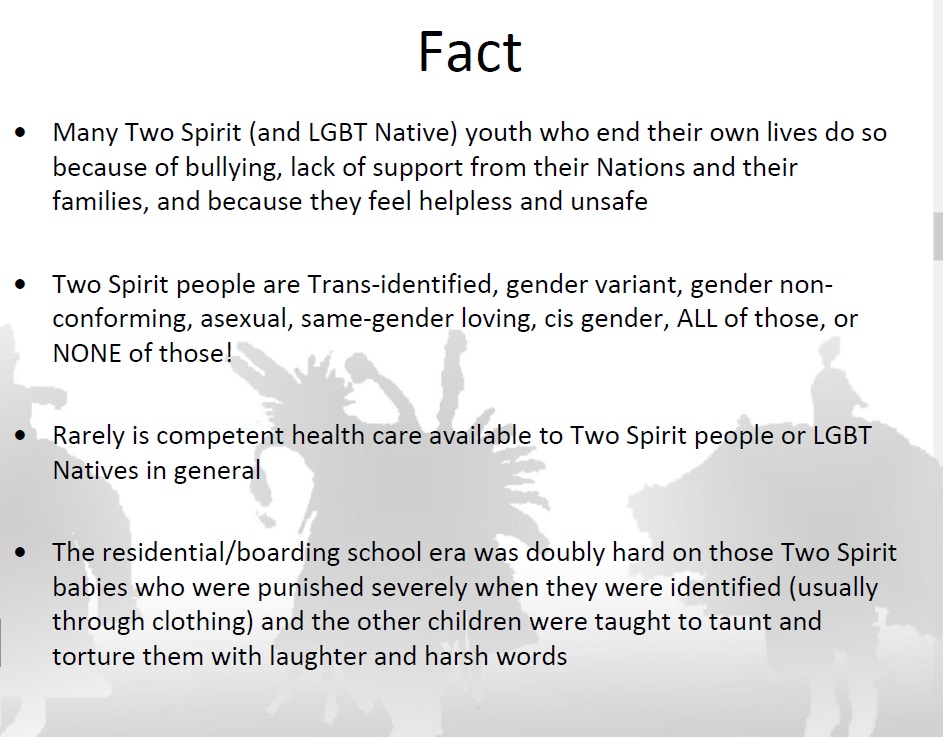
There continues to be a lot of misinformation being shared about what “Two-Spirit” means, and Natives saying “No” are ignored just like when we say, stop cultural appropriation and misuse. Here’s the fact: if you are not Native/Indigenous, you are cannot be a Two-Spirit person and you should not be using the term to describe yourself or anyone else. It was a term created by Natives for Natives, and most Native nations and peoples have their terms in their languages also. The Dinéh (Navaho) refer to them as nàdleehé or ‘one who is ‘transformed’, the Lakota (Sioux) as winkte, the Mohave as alyha, the Zuni as lhamana, the Omaha as mexoga, the Aleut and Kodiak as achnucek, the Zapotec as ira’ muxe, etc.
My original post on the topic at redhaircrow.com was way back in 2010, “Two-Spirit-Tradition, History & Future”, so I wanted to do an updated version because my knowledge expanded also, from the wisdom of Native/Indigenous scholars, elders and elders-to-be. This is information I share and include in some workshops or presentations if applicable, or if someone asks about the term and its usage. Please recall all information on this and my personal website are our intellectual property, and require a written request for permission to reprint or use.
Recently, I shared links to the free manuscript proof of forthcoming, “Suicide Prevention in Indigenous Communities”, which I worked on with others this past summer for (NASEM), National Sciences Engineering Medicines Academies. It was almost totally ignored even by those who say they want to learn more about Natives. It’s a collection of firsthand information, data and knowledge from some of the hard-working Natives today, elders, academicians, psychologists, doctors. One of the greatest sections was on Two-Spirit people from Sadie Heart of the Hawk Ali, their presentation “Being Two-Spirit” can be downloaded from this online source.
Sadie sharing important knowledge, “Two-Spirit people are not only trans-identified, gender or sexually variant, gender queer, asexual or other terms. We are all of those and none of those because Two-Spirit is a **spiritual term** that reflects back on the roles our Two-Spirit ancestors used to have in relation to their Nations. Natives who identify as Two-Spirit know we have a responsibility to our Nations, to learn our languages, to keep our ceremonies and protect our children. This was the main work of Two-Spirit people prior to colonization.
Two-Spirit people understand the roles Two-Spirit ancestors had, and how when a child was born into a nation and there was evidence this child had an affinity for work that didn’t align with the gender they were identified with at birth, there was a celebration. There was a big celebration and a feast, it was not the negative response seen in parents today, that they will now never have grandchildren. In fact, if something happened to the parents of a child, the child was given to the Two-Spirit people to raise because rather than reducing that person to someone with a male and female spirit living in one body, there was a spiritual aspect as well. Many Native nations believe Two-Spirit people have one foot in the spirit world and one in the physical, being able to see things that others cannot. Two-Spirit people were considered sacred.
Contrary to stereotypes and pop culture, all Native people are not people of medicine, pipe carriers, lodge keepers and sun dancers, and medicine is more than sage, tobacco, sweetgrass, cedar and corn pollen. Today, Two-Spirit people are engaged in the work of our Two-Spirit ancestors working in medicine, in the arts, in psychology, in law, and other fields that lift our people up. Many are in behavioral health fields, and this is not a coincidence. Not all have completed their “coming-in” processes, but Two-Spirit people are around, they are in your communities trying to recreate the ways of our ancestors in every field.”
Reality: Even for Native/Indigenous persons, just because they are LGBTIIQ, non-binary etc. it doesn’t automatically make them Two-Spirit. Native/Indigenous LGBTIIQ people can BECOME Two-Spirits, but it is not an automatic thing. Indigenous people from other continents and places ALSO had their terms and words for such persons, which they should be using also. For example, in Pasifika, Mahu (Hawai’i and Tahiti), Vaka sa lewa lewa (Fiji), Palopa (Papua New Guinea), Fa’afafine (Samoa), Akava’ine (Rarotonga).
Solutions: If you are “white”, European, etc. research your peoples culture and history and find the original terms for persons like yourself, or work together with your people or “adopted” peers to create a term for yourselves. Stop appropriating and misusing Native/Indigenous terms, cultures and traditions. Why does this keep needing to be said? Why are the collective voices of Native peoples being ignored? The answers to those questions goes straight back to Eurocentrism, privilege and learned behaviors that excuse ignoring someone’s “No”, for one’s own gratification, even if its violating their rights, dignity and life. That’s why we say symbolically to #ForgetWinnetou, which helped spread that practice against Native peoples.
Description: “We live in societies designed to crush our bodies and spirits, that seek to compartmentalize and confine us in every way, especially into heteronormative roles and bodies although gender, sexuality, even intelligence are naturally on a spectrum.
Variance, the state of being varied, is often seen as negative. Yet skills such as adaptability and variability helped our ancestors survive, and today are essential in gaining and maintaining balance, well-being and mindfulness. Being trans and/or also part of other minoritized or marginalized groups adds extras challenges for being accepted as who you are, of just living your life, of feeling safe in society, in your home, in your body.”
The event will have both English and German segments. Register asap as space is limited as Covid19 precautions will be taken regarding personal distancing, etc.
Please visit their event announcement page for all details and the schedule for the two days of inspiring, enlightening & solidarity supporting gathering.
My Title: “Allyship “Righting History – How Historical Amnesia and Omission Fuels the New Rise of Normalized -Isms”.
Description: “The minimization or exclusion of the contributions, achievements and presence of women, non-Europeans and non-heteronormative people in history is common and also needs correction, but those omissions are more obvious.
However, the Eurocentrism in Western education systems and media also has another name most don’t associate with it and few “white people” recognize as such: white supremacist ideology. What are some of its forms, methods and tactics, and what can we do to right the wrongs written into the history of western society contributing to the current rise of hate, intolerance and ignorance.”
16./17. November ab 10 Uhr
Nachbarschaftshaus Urbanstraße
Diese Veranstaltung wird in-Präsenz, sowie digital stattfinden. In deutscher und englischer Lautsprache, sowie deutscher Gebärdensprache mit Verdolmetschungen.
In Kooperation mit dem Nachbarschaftshaus Urbanstraße.
The Living Archives ist eine online Plattform zur Dokumentation, Archivierung und Weitergabe von Wissen aus und für BIPoC Communities. Es ist ein intersektionales, dekoloniales resistant-knowledge Projekt, durch und für BIPoC-Communities. Ziel ist es gebündelt (verlorene und/oder gelöschte) Inhalte und Wissen, das innerhalb von BIPoC Kontexten generiert wird/wurde, festzuhalten und für diese Communities wieder zugänglich zu machen.
An diesen zwei November Tagen wollen wir uns gemeinsame mit Fragen um die Herstellung und Sicherung von Wissen sowie dem bewegungspolitischem aktivistischem Erinnern widmen.
Mit Keynotes, Panels sowie Workshops werden wir uns gemeinsam mit dekolonialen Wissens(re)produktionen und Politiken des Erinnerns auseinandersetzen. Die Prozesse um Wissen über intersektionale Diskriminierung bzw. über Lebensrealitäten, welche von der Norm abweichen, das Erinnern aktivistischer Kämpfe, Personen oder Orte sind grundlegend von struktureller Auslöschung betroffen oder werden in ihrer Existenzberechtigung an den Ränder der Gesellschaft gedrängt. Wir werden uns deswegen gemeinsam in die Zwischenräume begeben. Zwischenräume, in welchen unsere Geschichten erhalten und weitergegeben werden so das wir uns nun mit unseren widerständigen Prozessen aus den gesellschaftlichen Nischen und digitalen Subräumen heraus ausdehnen können.
Programm:
16. November
10.00h Ankommen 10.30h Begrüßung 11.00h Keynote “Black Deaf History” von Vincent Hesse (DGS) 11.45h Mittag 12.45h Panelgespräch “Verwoben mit Verwobene Geschichten – erinnerungspolitischer Aktivismus in digitalen Plattformen” mit Iris Rajanayagam, Juliana Kolberg und Latifa Hahn (Deutsche Lautsprache) 14.00h Workshop Phase I Workshop 1: “EXPECT BIPOC_ism” mit Adetoun Küppers-Adebisi (Deutsche Lautsprache) Workshop 2: Allyship “Righting History – How Historical Amnesia and Omission Fuels the New Rise of Normalized -Isms” mit Red Haircrow (English spoken language) 16.00h Netzwerk Austausch und Ausklang
–
17. November
10.00h Ankommen 10.30h Workshop Phase II (gleiche Gruppen und Workshops des ersten Tages) 12.30h Mittag 13.30h Panel “Deine, Meine, Unsere Erinnerungen” mit Nataly Jung-Hwa Han, Kenan Emini, Bahar Sanli und Juliana Kolberg (Deutsche Lautsprache) 15.00h Launch & Keynote “TRANCE” mit Sea Novaa (English spoken language) 16.00h Performance
Weitere Informationen über zu den Workshops und den Referent*innen. Der öffentliche Teil der Veranstaltung wird simultan in deutscher und englischer Lautsprache und deutscher Gebärdensprache verdolmetscht. Die Workshops werden unterschiedlich verdolmetscht, weitere Informationen findet ihr bei den jeweiligen Workshopsbeschreibungen.
Anmeldung: Die Teilnahme an der Veranstaltung ist nur mit vorheriger Anmeldung möglich. Manche Workshops sind als Safer Spaces konzipiert und nur für BIPoC zugänglich. Die Teilnehmer*innenzahl ist begrenzt. Menschen mit Diskriminierungserfahrungen werden in der Anmeldung bevorzugt.
Anmeldungen bitte bis Freitag, den 09.11.2022 an contact@xartsplitta.net.
Es wäre toll, wenn ihr bei eurer Anmeldung zu folgenden Punkten etwas schreiben würdet:
An welchem Workshop möchtest du teilnehmen?
Warum hast du dich für die Teilnahme an dem Workshop entschieden?
Auf welche Weise hast du dich bisher mit dem Thema beschäftigt?
Hast du Bedürfnisse oder brauchst du zur Teilnahme Unterstützung (z.b. Kinder Betreuung oder Sprachassistenz etc)?
Die aktuelle Bedeutung von People of Colour prägte sich in den USA mit der Entstehung der Black-Power-Bewegung in den späten 1960er Jahren. Der Begriff sollte eine Gruppe an Menschen in ihren Kämpfen gegen rassistische Unterdrückung und in Absetzung zum Weißsein, solidarisch zusammenbringen. In den 1980/1990er Jahren wurde “People of Colour” in Deutschland in der diasporischen Bewegung aufgenommen. Seit dem bis heute haben wir die unterschiedlichsten Bezugspunkte zu dieser Selbstidentifikation entstehen lassen. Einiges an Mehrschichtigkeit ist notwendig, anderes durch Übersetzungsfehler oder Tokenism entfremdet. Im Rahmen von #CommunitiesSolidarischDenken beschäftigen wir uns dieses Jahr mit dieser Solidaritätskategorie und möchten hierfür Kontext schaffen.
Gemeinsam mit den Teilnehmer*innen der Fokusgruppe korientation, BIWOC* Rising, dem RomaniPhen Archiv, May Zeidani Yufanyi, Red Haircrow und unserem Vorstand Saideh Saadat-Lendle und Iman Attia wollen wir am 31.10., ab 19 Uhr zu BIWOC* Rising einladen.
Mit euren Fragen und in einem offenen Gespräch im safer space möchten wir Geschichten teilen und uns bewegungspolitisch Erinnern mit den Aktivist*innen, die das Aufkommen von People of Colour beobachtet und selbst begleitet haben in Deutschland.
Diese Veranstaltung ist eine Einladung an BIPoC. Bitte schreibt uns bei der Anmeldung einige Worte zu euch. Es gibt eine begrenzte TN-Zahl, daher meldet euch bis 24.10. unter contact@xartsplitta.net an.
Informationen zu den Gesprächspartner*innen folgen in Kürze.
Die Illustration im Hintergrund ist von Jasmina El Bouamraoui @el.boum und Karabo Poppy Moletsane @karabo_poppy.
Order now to screen our award-winning documentary on the origin and effects of Native American stereotypes, just in time for November, which is Native American Heritage month. It is a documentary intended for audiences 12 and older, and has screened to positive reception at universities, gymnasiums, organizations and groups who are interested in helping create a better world and future for all peoples.
Our film focuses on how the same mentality that ignores Indigenous rights to self-representation are often those who stereotype and gaslight GLBTIIQ people, women, the disabled or economically challenged, especially people of color just for desiring change and equality. It is basically saying, “My gratification is more important than your dignity, your rights or even your life.” This is a main facet of rape culture. It is intersecting oppression.
How do we go forward together in a better way? Watch the trailer here, and previous clips from production.
WAYS TO WATCH!
Available with German or English subtitles.
Opportunities for Classroom, Campus, Organization & Library Screenings
If you are interested in also having Virtual or In-person panels with Filmmakers & Film Participants, please contact us via our form, which can be found on our FAQs page.
Streaming & Digital Site License Options – Please contact VTAPE, our Canadian based artist run distributer, to arrange your rental copy and/or screening copy. There are only a few DVD copies left for private use, but we hope to offer a streaming option for inviduals in the near future.
A new excerpt using raw footage from our documentary on poverty porn and the voyeuristic quality of European, but especially German “observation” and misrepresentation of Native American cultures and peoples.
The willful stereotyping of Indigenous peoples and the racism, white supremacist ideology and especially the patriarchy utilized when those from the demographic which gained power through violence, genocide and exploitation of others believe they have the continued right over other peoples bodies, stories and narratives. They use systematic racist and sexist structures in industry and society created by those just like themselves, to continue to erase, replace and/or misrepresent/misuse other marginalized and minoritized peoples and groups.
It’s a deep societal problem that doesn’t just affect Natives.This is not a niche film or issue. The mentality that not only practices but defends the minimization, erasure and silencing of certain groups or peoples, is a widespread problem at the root of most every disaster, crisis and issue facing our world today. It’s at the root of imperialism, capitalism, climate crisis, consumerism and violation of rights of all kinds, past and present. We do not want it to be our future. We all should be committed to ending such practices, “protected status” and privilege right now.
That’s why we say, “This is not about Winnetou. It’s about you and us. ALL of us.” That’s why we say it is far past time to symbolically unlearn and forget Winnetou, and all the practices, the behaviors, mindsets and value(less) systems that promote erasure, exploitation, fetishization and appropriation.
Dialogue from the film: “It’s an unfortunate aspect of capitalism and white supremacy that people end up in a job they don’t necessarily like or exploiting parts of their identity that they would rather not but that’s how you survive. I often downplayed my (Native) identity and didn’t talk about it because I didn’t want to be forced to perform myself to be consumed by white Germans.
Unfortunately, that’s one of the only ways you can make money in Germany, and in Berlin especially. I met many people that all of the things they’d done and all the things they were became a marketing strategy to perform personal tragedies, migration stories, or poverty porn for Germans who consumed it because it made them feel like they’re open-minded, liberal and understanding of other people when they’re voyeurs basically.
I feel like one of the first important things to do is remove the emphasis on spectacle. If your only interaction and the way you interact with others is primarily through spectacle then it’s a very privileged position. It’s very focused, it’s pretty one way. It doesn’t have complexity. I feel that’s the starting point for people being able to interact with Native peoples, and people not like themselves in general.”
Our documentary is available on DVD for private use, but there’s only 25 copies now left in our stock! Once they’re gone, they’re gone.
Organizations, institutes, universities, etc. are encouraged to contact VTape, the non-profit artist run distribution company based in Canada, which can provide screening and institutional copies for rent or purchase.
We have continued to search for a European or especially a German distributor or studio to broadcast, but no matter how open-minded, diversity conscious and anti-racist many claim to be, we’ve not been able to find one despite our award-winning status and social justice, human rights contentiousness of our film.
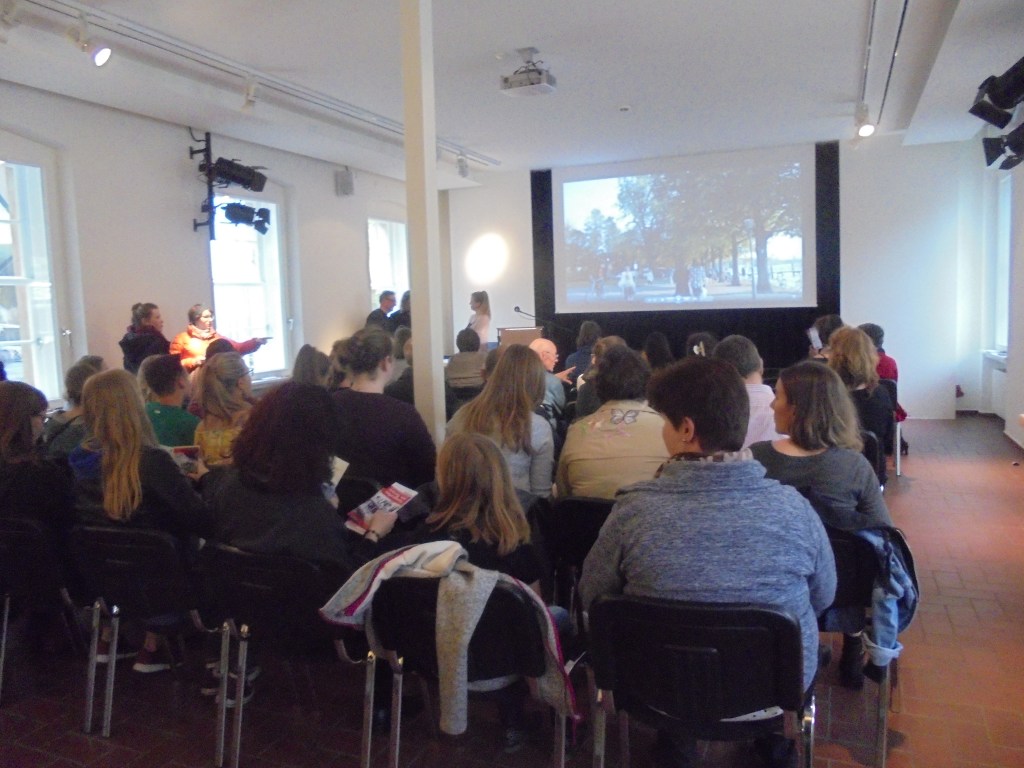
Von Dr. Andreas Brenne nach der Filmvorführung und Diskussion am 26. April 2019. Osnabrück, Museumsquartier.
“Freitag Abend im Museumsquartier Osnabrück: Red Haircrow – “Forget Winnetou! Loving in the wrong way” (Film und Diskussion)
“Ein anregender Abend im vollbesetzten Haus. Mit dabei: zahlreiche Lehrende und Studierende der Uni Osnabrück (Institut für Amerikanistik, Institut für Sozialwissenschaft) und der Autor und Produzent des Films Red Haircrow (Autor, Psychologe & Filmemacher). Ein eindringlicher und in seiner Direktheit beeindruckenden Dokumentarfilm gab er den in Deutschland ansässigen Native Americans eine Stimme und präsentierte kontroverse Positionen und Perspektiven auf das Thema „Herkunft und kulturelle Identität“.
“Kein Infotainment a la Michael Moore sondern ein fundraising Film mit begrenztem Budget. Insofern lag der Fokus auf den sehr persönlichen Statements, die durch Interviews mit Experten (u.A. Hartmut Lutz) ergänzt wurden. Auch die anschließende Diskussion mit dem Autor war sensibel und inhaltlich komplex. (Red Haicrow: Wunderschöne Bücher, ich wünschte ich hätte Karl May einmal kennengelernt) sondern eine differenzierte Auseinandersetzung mit dem deutschen Bild des Indianers. Wertschätzung, Interesse, Aneignung und stereotype Diskriminierung liegen oft nah bei einander und es ist hilfreich dies näher zu untersuchen. Ein Ausweg – so der Autor – ist Begegnung, Kontakt und Interaktion. Und natürlich soll man weiter Karl May lesen und zur Aufführung bringen. Von politisch korrekten Bearbeitungen (wie jüngst bei #PipiLangstrumpf) hält Red Haicrow gar nicht. Man sollte Winnetou also nicht vergessen, sondern unter einer anderen Perspektive wieder entdecken. Ein gelungener und auch nachdenklicher Abend.”
“Warum sollten Sie diesen Film sehen? Weil er neue Perspektiven eröffnet. Weil er zum Nachdenken bringt. Weil er innovativ ist. Und weil das Thema uns alle angeht.
Winnetou kennen die meisten (weißen) Deutschen, selbst wenn sie Karl Mays Bücher nicht mehr selbst gelesen haben. Wir Deutschen lieben Indigene Kultur. Wir sehen oft schon als Kinder Filme und lesen Bücher darüber. Manche von uns gehen so weit, in ihrer Freizeit “Western-Parks” zu besuchen, sich zu Karneval als “Indianer*innen” zu kostümieren oder an den Wochenenden Indigene Kultur “nachzuerleben”. Aber echte Indigene Personen? Die heute in Berlin leben? Darüber wissen die meisten von uns nichts.
Der Film ändert das. Er zeigt auch sehr nachdrücklich, dass unsere Faszination für Indigene Kultur alles andere als harmlos ist. Kulturelle Aneignung heißt das, wenn sich Weiße ohne Erlaubnis Elemente anderer Kulturen zu Eigen machen. Selbst mit den besten Absichten hat das rassistische Effekte. Also: ja, der Film leistet wichtige dekoloniale Arbeit.
Und falls Sie nicht weiß sind? Sollten Sie den Film trotzdem anschauen. Er zeigt eine oft übersehene Facette der hiesigen kulturellen Landschaft, dokumentiert aber gleichzeitig, wie überkommene rassistische Strukturen und Stereotype Indigenen Individuen in Deutschland das Leben schwer machen. Heißt: da muss sich was ändern. Der Film gibt wichtige Hinweise wie. Vor allem aber zeigt er heutiges Indigenes Leben in all seiner Komplexität auf eindringliche, bewegende Weise. Wer braucht da noch Winnetou?
Ja, für all die Fehlinformationen, reaktionäre Empörung und Verlogenheit, die im Umlauf sind und die von vielen deutschen Medien absichtlich geschürt wurden.
Ich habe auch ein Zitat aus einem Interview mit Dr. Bolz aus dem Jahr 2017 gefunden, das sehr relevant für die deutsche Reaktion auf die rassistische und sexistische Ravenburger Publikation “Cancellation” und die fortgesetzte Ausbeutung von Mays Namen, Schauplatz und Figuren ist. Vor allem musste ich an die weißen CIS-Männer denken, die größtenteils immer noch diese spezielle kulturelle Aneignung, den Missbrauch und die falsche Darstellung vorantreiben.
Obwohl ich glaube, dass das meiste davon unwahr ist, zum Bespiele, wird sich die Stereotypisierung nicht ändern. Viele Menschen haben ihre Sichtweise auf positive Weise geändert, was zu bewundern ist. Bolz’ Zusammenfassung eines bestimmten Typs von weißen Deutschen ist zutreffend.
“Die Stereotypisierung kann und wird sich nicht ändern, weil es nicht der Charakter der Deutschen ist, dies zu tun. Sie wollen, dass die Dinge einfach sind. So wie es ihnen gefällt. Und außerdem wollen die Deutschen nicht über die Komplexität oder die Probleme nachdenken, die durch das, was sie tun, verursacht werden. Sie mögen Indianer, sie wollen sich wie sie verkleiden und das nachspielen, was sie für ein vergangenes “indianisches” Leben halten. Sie wollen nicht über die Folgen ihres Handelns nachdenken oder diese bedenken.”
Manche mögen das als “engstirnig”, antiquiert und monolithisch bezeichnen, nicht wahr?
Aus dem Jahr 2017, mein der Freitag Interview mit Matthias Dell über unseren Dokumentarfilm und die Stereotypen der indigenen Gruppen. Aber…es geht nicht darum, dass es langweilig ist. Außerdem wird in diesem Film eine scheinbar queere Figur als etwas Böses dargestellt. Dies ist ein weiteres schädliches Stereotyp und eine Troupe einer marginalisierten oder minorisierten Gruppe. Deutschland fördert weiterhin schamlos die Stereotypen der indigenen Gruppen. Rassismus und Stereotypen.
Deutsche wie diese indoktrinieren Kinder weiterhin mit rassistischen, kolonialen Praktiken. Praktiken und Verhaltensweisen, die in der Ideologie der weißen Vorherrschaft und des Eurozentrismus wurzeln.
Sie lehren auch Vergewaltigungskultur und -mentalität. Das bedeutet, zu ignorieren, wenn jemand sagt: “Nein, bitte hör auf, du tust mir/uns weh”.
Und man bringt ihnen bei, mit “Ja, das werde ich/wir! Weil es sich für mich gut anfühlt.”
Was für eine schreckliche Sache, die man Kindern beibringt! Und wie wir in der Welt um uns herum sehen, sind die Stereotypen von Geschlecht, sexueller Orientierung, ethnischer Zugehörigkeit usw. All das ist schädlich und unnötig, aber Regisseure und Autoren wie diese werden weiterhin finanziert. Wer finanziert solchen Rassismus?
Kürzlich habe ich den Film PREY rezensiert, der sich positiv auf die Arbeit mit indigenen Nationen und Völkern bezieht und ihre Kulturen und Geschichten auf nicht rassistische Weise darstellt. Natürlich PREY nicht für Kinder geeignet, aber meine pädagogische Rezension enthält viele Informationen, die jedem helfen, sich gegen hartnäckige, vorsätzlich rassistische Filme zu informieren.
#FORGETWINNETOU! LOVING IN THE WRONG WAY
Zusammenfassung unseres Doku-Film: “Dieselbe Haltung, die das Recht indigener Völker auf Selbstdarstellung ignoriert, ist es auch, die GLBTIIQ-Menschen, Frauen, Behinderte oder wirtschaftlich Benachteiligte, insbesondere People of Color, stereotypisiert und gaslighted, d.h. ihnen die Realität ihrer Erfahrungen abspricht, nur weil sie sich Veränderungen und Gleichberechtigung wünschen. Im Grunde heißt das: “Meine Freiheit und meine Bedürfnisse sind wichtiger als deine Würde, deine Rechte oder sogar dein Leben.” Es ist eine sich überschneidende Unterdrückung.
Die meisten Filme über Native Americans konzentrieren sich auf europäische Erzählungen oder indigene Erfahrungen in Nordamerika, aber es gibt auch Native Americans im Ausland, und im “indianerverrückten” Deutschland – “auf die falsche Art geliebt” zu werden, hat viele Formen. Deutschland ist ein Mikrokosmos der Kämpfe, die überall auf der Welt stattfinden, sowohl gegen als auch für die Dekolonialisierung; für die Überwindung der weißen Vorherrschaft und des Imperialismus, die unsere Welt gespalten und zerstört haben.
Wir erforschen die Wurzeln von Rassismus, Kolonialismus und Kultureller Aneignung in Deutschland aus einer selten beachteten Perspektive: dem Stereotyp der indigenen Amerikaner, die sie zu verehren vorgeben.
Warum diese ” Charaktere ” so rassistisch und schädlich sind
Von der APA:
“Solche Aussagen wurden nach Forschungen über Maskottchen, Karikaturen und Vorurteile zum Thema Natives im Rahmen einer Resolution der American Psychological Association aus dem Jahr 2005 bestätigt. Die Organisation forderte ein sofortiges Ende solcher Darstellungen auf Grund der negativen Auswirkungen, die diese nicht nur auf die Natives, sondern auf alle Menschen und insbesondere auf Kinder haben.
Die Forschung hat gezeigt, dass die fortgesetzte Nutzung von amerikanisch-indianischen Maskottchen, Symbolen, Bildern und Persönlichkeiten auf Grund folgender Punkte nicht nur eine negative Auswirkung auf die Schüler amerikanisch-indianischer Wurzeln, sondern auf alle Schüler hat:
• Sie untergräbt die Bildungserfahrung aller Gemeinschaften – insbesondere bei solchen, die wenig oder gar keinen Kontakt zu indigenen Völkern hatten. • Sie lehrt Kinder nicht-indianischer Herkunft, dass es in Ordnung ist, an kulturell missbräuchlichem Verhalten teilzuhaben und Ungenauigkeiten über die Kultur der Indianer Amerikas zu verbreiten. • Sie bestätigt negative Bilder/Vorurteile, die durch den Mainstream befördert werden • Sie vermindert die Fähigkeit der indianischen Nationen Amerikas, akkurate und respektvolle Bilder ihrer Kultur, ihrer Spiritualität und ihrer Traditionen zu vermitteln. Viele Indianer Amerikas beschreiben die Vorurteile als respektlos und als Beleidigung gegenüber ihren spirituellen Überzeugungen. • Stereotype Wahrnehmungen von Natives sind ein zeitgenössisches Beispiel für Vorurteile und eine Form der Diskriminierung einer ethnischen Minderheit durch eine herrschende Kultur.”
Don’t look away at any moment. Prey is a beautifully shot and realized film strategically different than its predecessors, arguably far outshining them in depth of story and character. Other reviews will take you through the cinematography, direction or dissection of fight scenes, symbolism and the new Predator appearance, and inevitably to Eurocentric based criticisms.
While never forgetting the range of emotions experienced watching PREY as any viewer might, this spoiler free review will provide resourced knowledge and facts on certain intercultural, European and Native topics relating to the film and its production, for those wanting to expand their minds beyond the stereotypes and mis/disinformation still being taught about Native cultures, peoples and history. Note, references and resources follow the main review.
Traditions vs. Stereotypes
Set in 1719, in what was renamed North America by European colonizers despite Indigenous peoples having their own names for it, the story centers on a young Comanche woman named Naru who is played by Amber Midthunder. Naru wishes to be more than a gatherer and caregiver, she wishes to also be recognized as a hunter, which some viewers have surmised to suggest she was a “Two-spirit” person (1). Not necessarily. To my understanding, the characters in film never say this about Naru, but unlike European interpretation and stereotypes of Native life (and even their own pre-colonialization millenia), each member of the community needed a wide range of skills, for example, sewing, gathering and knowing healing items, finding and cooking food, to building and animal husbandry. Tasks were not gender-specific/only, a practice of labeling to support patriarchy, hierarchies and discrimination shared and enforced by Christians first in Europe, then in the Americas (2).
In PREY, Naru goes beyond the new troupish practice in film (or video games) of centering a (usually white) female character able to fight and defeat even the toughest opponent, singly or in groups. Naru is beyond the practice of simply replacing the typically white male lead with a woman, without changing the way the story is written, and how the characters and their experiences are portrayed or exaggeratedly representing “empowerment” through adoption of the self-same, most problematic characteristics of toxic masculinity. With her loyal dog companion at her side, in Naru we see a young woman who wasn’t required to be scantily-clad “Pocahantas” style, (who was a child during the events portrayed by Disney, who was subjected to child rape, kidnapping & an early death at barely 20yrs old), and who is vulnerable at times, yet also brilliantly shows resilience, ingenuity and intelligence rarely accorded women of color in film, especially Native American or Indigenous women. If included at all in films or TV series, Native American women are stereotypically and overwhelmingly portrayed as drug addicts, rape victims and/or are subjected to violence, often very graphically and in ways (also rarely done) to female actors of primarily European heritage (3).
In the film, some objectors to Naru’s official recognition as a hunter, as she was obviously proficient and known for her prowess, were due to fears for her safety (and maybe not from animals), but others showed active resentment, which may or may not have been influenced by the changing social dynamics influenced by contact with white men. By 1719, even this far west there would have been news or contact, some extensive, with European explorers, traders and trappers and the priests/historians often accompanying them. From the beginning, both Natives and Europeans recorded the refusal of most Europeans to respect, and in some cases, even acknowledge Native women’s important roles in their communities, voicing derision and shock at how they were leaders, commerce heads and spiritual guides. Such ones were relegated to a perpetual subservient role, in print and in practice, which some ill-disposed Native men (past and present) decided to accept against traditional Native values and worldviews (4).
Juxtaposing “Predators”
For the first time in watching Predator films, even since the first movie headed by Arnold Schwarzenegger (and perhaps still my favorite), it occurred to me the wastefulness of the Predator’s way, as was perhaps intended, as compared to a similar prideful colonizer way, the “take & waste” for sport and without anything resembling true respect. However, this particular Predator was different than we’ve seen in such films as 2004’s, “Alien vs. Predator” or read about in novels like “Predator: Hunter’s Planet” (1994), they have their own personalities and differences, too. Their own interpretation of the Predator code.
Very early in the film, viewers may not have been surprised to see a trap, but that is metal and secured by hammered metal links in what first appears unspoiled nature, its silent presence might introduce dread in anyone, but especially Indigenous hearts. It is an alien device in their world. Thus, anyone might rightly deduce we will see both two kinds of predators in PREY, and a juxtaposition of what type is worse, the big, fanged jawed warrior we’re used to in the series or the more insidious, genocidal type more often heroized in film and western society. Indeed, the European language speaking predators wants and goals are different than the extraterrestrial alien’s, and as history has shown, without restriction to age, threat-level or location.
This incarnation of the Predator series also portrays the reality, which other genres also show, i.e. that “not all European invaders/settlers were the same”, which really goes without saying, as an individual(s) of any group is not the same as all others in that group. This is clearly highlighted when one presumed Frenchman says as much. The problem then and now is, more Europeans (American or otherwise) mostly still follow and even elect some of the worst examples of humanity, mostly due to fear (even paranoia) of the unknown and their own self-interest: as long as they remain at least a little “above” marginalized and minoritized peoples and groups, they get to keep a certain privilege (at least in their own minds). Yet they lose their spirits and any connection to a healthy culture, which too often results in cultural appropriation (which we’ll talk about later) from the very peoples and cultures they collectively nearly destroyed. Although their demographic has the near total majority of structural power, they never stand up against their peers, the minority of bullies, too often siding with these against any who try to stand up against injustice, inequity and violence (5).
More on Fetishization, Cultural Appropriation & the Importance of Native Women
Living in Germany as I have the past years, and often working or commenting directly on Native American fetishization, reductionism, cultural appropriation and its roots in racism and Eurocentrism, such as in my 2018 documentary, “Forget Winnetou! Loving in the Wrong Way”, in contemplating to view (but especially) and review PREY, I felt both eagerness and reluctance. Even more Europeans who willfully defend racist practices and behaviors will use the opportunity to add justification to their Indianthusiasm, “playing Indian” and dressing up. Others will consume it to recreate facets of it, perfect their playacting, or as fodder for Halloween costumes come October. You’ll have those critiquing it to boost their status of “Indian expert” (no such things), saying, “this and that is accurate, but so-and-so isn’t!”, while a certain type of film director will think of past productions or plan for future projects about “Indians”, failing to understand the critical need of humility, planning with, having equal decision-making power and the support of Native nations or organizations/associations, not just a few Indians being paid to do what they’re told.
In all of that, mostly Native women are left out of any equation, past and present. They are erased, silenced, demeaned, reduced, absent from the importance they play in history and today. In the volumes Europeans have written, the film productions, in pop culture they’re shown as “Indian maidens” or “Pocahotties”. Native women and girls are fetishized, hypersexualized, infantilized and further subjected to abuse, assault and murder epidemically, especially if they dare speak up, show strength or seek to regain their rightful places of leadership, authority and wisdom to BALANCE perspectives, lifestyles and authorities with others, the men and Two-Spirit. In western society, Native women have especially been treated the way men have treated the Earth, most notably and accurately described in this quote.
“They treat Mother Earth like they treat women… They think they can own us, buy us, sell us, trade us, rent us, poison us, rape us, destroy us, use us as entertainment and kill us. I’m happy to see that we are talking about the level of violence that is occurring against Mother Earth because it equates to us [women]. What happens to her happens to us… We are the creators of life. We carry that water that creates life just as Mother Earth carries the water that maintains our life.” –Lisa Brunner, White Earth Ojibwe
Conclusions
Naru’s story isn’t just a PREY or PREDATOR story, as utterly enthralling, exciting and heartbreaking as many such as myself found it. Watching Naru use her strengths, observational skills and wisdom about her body and environment different than a man might have or could have, to battle a foe of much greater strength was thrilling. It helped renew my fighting, resistant spirit in my here and now, in my life where overwhelming odds and threats are so constant, it is easy to feel hopeless or without worth or possibility. That is exactly what a certain demographic wants marginalized, minoritized or anyone different to feel, whether that’s being neurodivergent, non-heteronormative, of different socio-economic status, heredity or ethnicity or whatever else. They want them to disappear.
Naru’s story is also one of empowerment in a very specific way that should be seen as a message particularly to men, very much including Native ones. That is, Native women and Two-Spirit persons need and deserve support to regain their places in Native societies, and are of benefit in any society or situation. Without their power and influence in Native communities, it may be recognized communities have been slower to heal, less resilient and reliant on Native languages, cultures and traditions which are Medicine, and less able to fight violence, desecration & erasure of Indigenous values and ways, which benefit all. I certainly won’t fail to mention this includes original European groups and Indigenous peoples, and their women and sacred beings also, who were first in the line of fire from Europeans who adopted and violently interpreted Christianity to further their aims of power (6).
PREY is a triumphant film for so many reasons. It was beautiful in so many ways. It’s a great example of how people from the dominant structural power can work together with people from marginalized and minoritized groups in ways THE LATTER feel help correct centuries of misrepresentation and misinformation instead of reinforcing white supremacist, sexist, Eurocentric narratives and behavior.
I highly recommend PREY for anyone of appropriate age, acknowledging there is graphic violence and scenes of death of both human and animals, although not as explicit as seen in previous Predator series.
Disclaimer: This review includes commentary and opinions informed by research, correspondence and extended contact, both personal and professional, with Native academicians, experts, relatives and elders. As clearly seen above and below, references and citations are provided to many, and more may be added in the future. It is not designed nor intended to demean, represent, or speak for any specific Native nation, group or demographic.
(2) The practice of labeling (and disdaining/shunning) gender specific/only was later introduced and enforced by Christians first in Europe, then in the Americas, in which someone who appeared to only be male was expected to do only certain work, certain tasks, and be romantically or sexually attracted solely to the “opposite gender”, and similarly women were supposed to restrict themselves to certain work (goals, ideals, etc.) deemed acceptable for them as the “fairer” but “weaker sex”. For each, this included both spoken and unspoken restrictions about dress, comportment, styles of walking, laughter, speech, etc. unless one be deemed “unnatural”, and hence deserving of punishments and even death. An important note in connection to object (1), Christendom’s priests viciously opposed and prompted the deadly targeting of any and all Two-Spirit persons they observed in Native communities, beginning the even more intensive oppression and abuse of such persons which continues today, and which some Native communities accepted, particularly those who accepted the worst interpretation of the Christian religion foreign also to Europeans.
(4) Many Indigenous societies were matriarchal and/or egalitarian, with men, women and Two-Spirit individuals handling matters in their recognized purviews, physical, spiritual, social. Europeans (almost always men) often refused dealing with women and especially Two-Spirit persons, and in recording Native stories, cultures and traditions they observed: from the very beginning the overwhelming majority of their accounts recorded only a third of actual Native life and living, and that with European interpretations and beliefs superimposed upon them. The Native American chieftain system believed traditional and de rigeur by most of the world is mispresentative of most Native tribes, which had a triumvirate of sorts, that of the men’s, women’s and Two-Spirit councils. The male-only chieftainship is one that came to be more utilized, at least in front of outsiders, through adopting foreign, European patriarchal ways, lowering status/power, and erasing and excluding women and Two-Spirits, to the detriment of all. This practice and information is found in many sources, but one that collected many first hand accounts regarding is in “Spirits of Blood, Spirits of Breath: The Twinned Cosmos of Indigenous America” by Barbara Alice Mann, which I reviewed for NAISA in 2018. This book also goes into the metaphysical, ancient beings of Native North America different than Indigenous peoples, symbolism, Thunderbirds and sacred creatures.
(5) Early resources, (the best sources of recording accurately what Europeans did, as many are self-written accounts, not the revisions of the 1800s forward), from the earliest days of European incursions to “North America” but especially when more opted to go to the “colonies” to escape the abuses and injustices of the “lower” classes and minorities of the Old Countries, some wished to live in peace with Native Americans and had formed working alliances of commerce and trade (1600-1700s). And I am not talking about Cherokees etc. of later American history (1750-ish forward) or the largely British colonists. However, the British crown and its servants objected to this, abolished such alliances, and even jailed and executed those who tried to defend such choices. The Shocking Savagery of America’s Early History at Smithsonian Magazine.
That being said, in particular, Europe’s various monarchies and peerages using Christianity as a crutch and sword, creating a perfect storm of savagery and depravity wherein non-privileged groups were unleashed on the world, with the worst of its criminals being allowed freedom to do whatever they wished as long as the Church and State reaped most of the reward. Through the wealthy’s excesses, countless wars, revisions of the Bible and Church doctrines, intolerances, oppressions and bigotry, they created generations willing to do anything to anyone to gain some power, wealth or land, and they stamped their seal of approval on it all with the 15th century’s Doctrine of Discovery (still not rescinded”), the Papal Bulls and Manifest Destiny to absolve themselves or their agents of any crime of genocide, theft etc. (Luk, 2022; Eneas, 2022; The UN’s Declaration on the rights of Indigenous Peoples).
(6) For more information about original European peoples, decolonizing and reconnecting to their Indigenous lifeways, beliefs and meanings, a good resource is “Awakening the Horse Peoples” resource site. This “decolonization is a powerful process that allows reconnection with the places we come from, and the ways of life that shaped our ancestor’s experience and continue to live hidden within ourselves; reawakening identities of who we are in a line of people from ancient ancestors to future generations; restoration of sacred ways of life, transforming from allies to true relatives in anti-racist action, solidarity work, and resistance struggles of Indigenous people and other people of color; and making healing of historic traumas possible for ourselves, and for Indigenous people who suffer from colonization and genocide.”
My Current & Continuing Projects & Endeavors
Current/Continuing Projects & Endeavors
“Almost” (website) a short documentary on overcoming stigma and prejudice. In production.
On-going research project on Autistic Spectrum Disorder, intercultural competence and the effects of stigma and prejudice against different cognitive realities and abilities. See related research here.
An RPG. A role-playing video game/visual novel in development. On origins, our earth, the ancient present and an alternative future.
Varied Spirits a forthcoming collection of poetry, art & photography from transgender persons “gathering the dignity, the sacrifice, and the beauty of our lives, loves and living. Of our spirits.”
Find our projects of interest, and think you might like to help? Write us.


 See our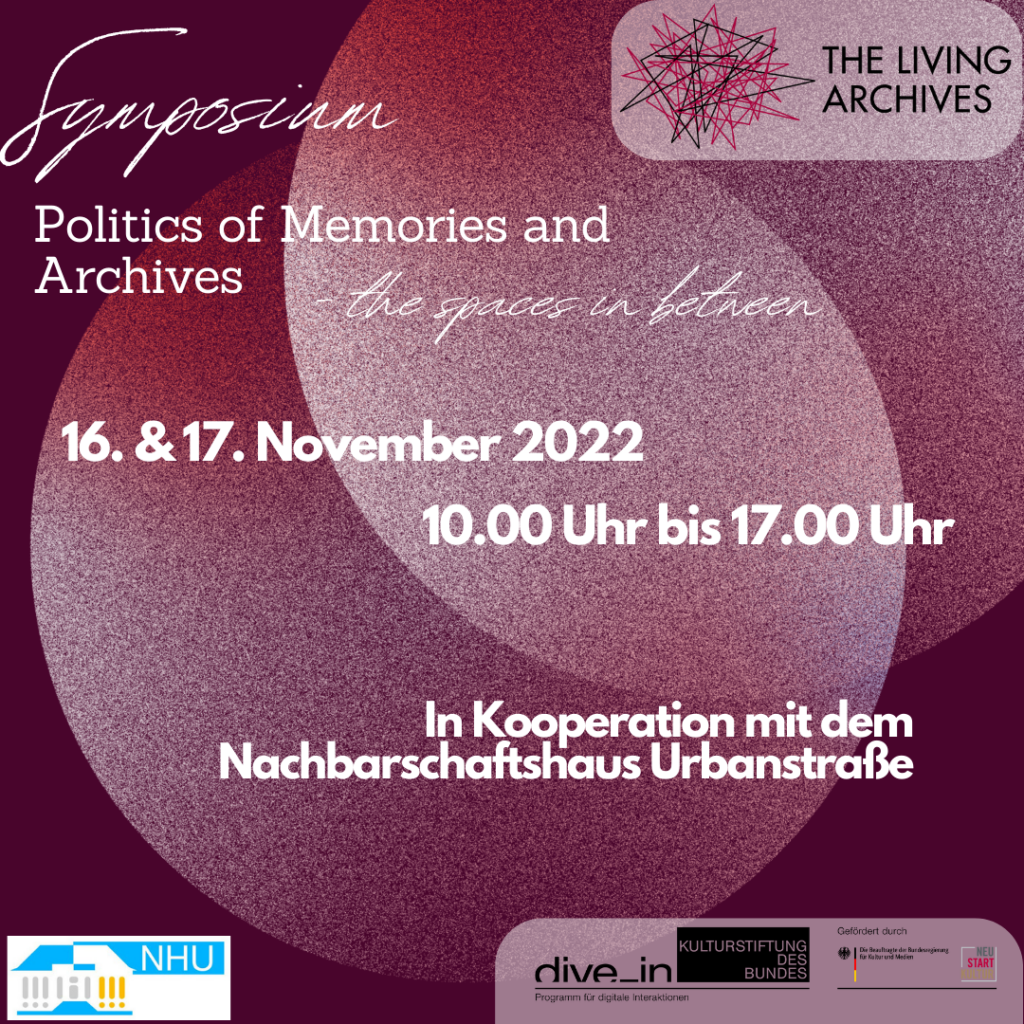

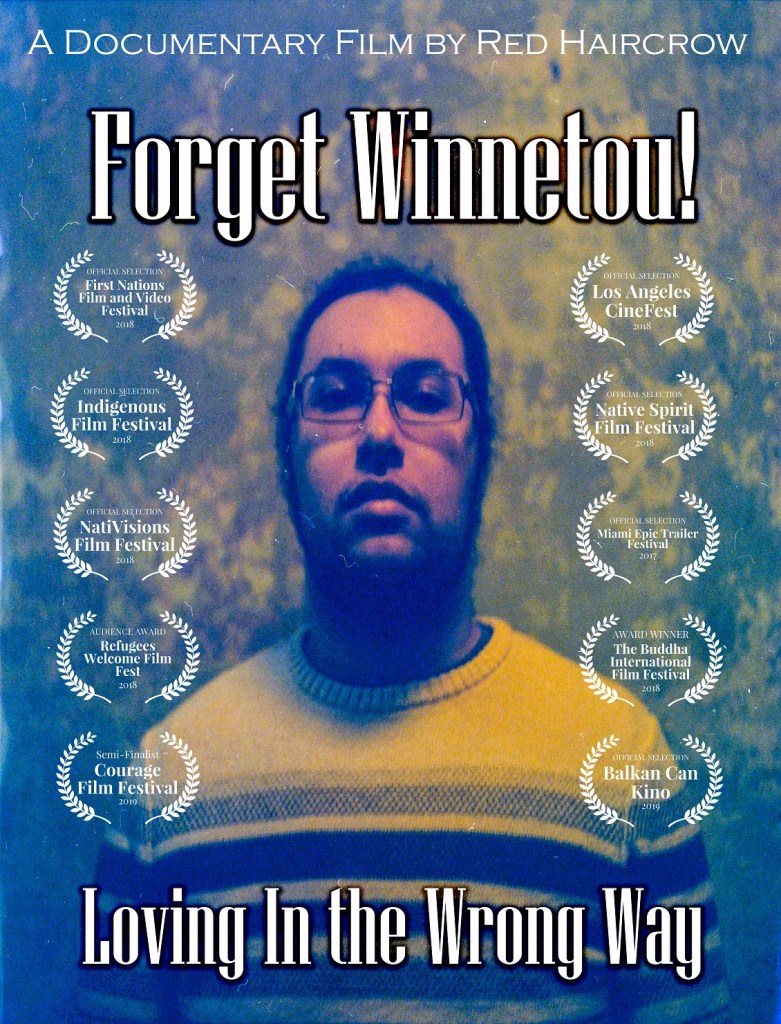


 Forget Winnetou! Loving in the Wrong Way
You must be logged in to post a comment.