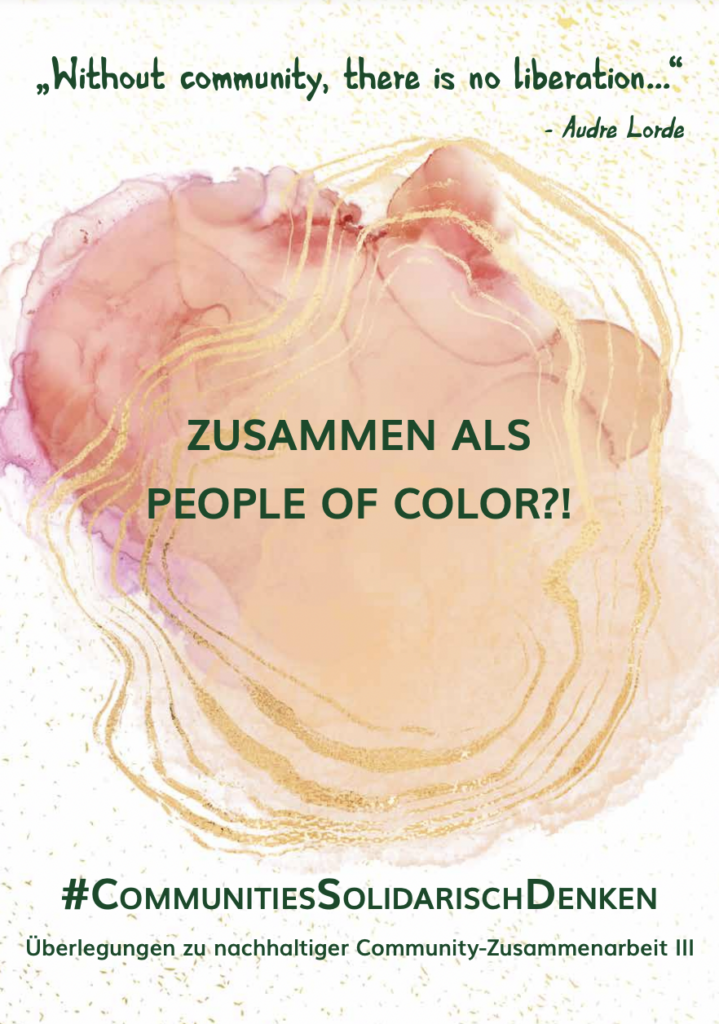
Now Available – “Zusammen als People of Color?!” the 2022 brochure for #CommunitiesSolidarischDenken via xart splitta (In German)

Bildschirmfoto-2022-12-06-um-12.08.44-719x1024

My essay “Terming Us into New Obscurity” was included, with perspectives on the usage and evolution/deevolution of the terms BIPOC and POC. My contribution and the brochure is in German. 

Shared from the xart splitta website:

“#CommunitiesSolidarischDenken ist nun im dritten Jahr einer der thematischen Schwerpunkte bei xart splitta. Wir haben über Solidaritäten gesprochen, geschrieben und uns ausgetauscht – über gute und schlechte, gescheiterte und gelungene, schwierige und einfache, Solidaritäten, aufgrund von Gemeinsamkeiten oder trotz Differenzen. Ziel ist hier der Versuch, community-übergreifend zu
arbeiten und dabei bewusst Community-Verbindungen zu schaffen. Dazu gehört, Unterschiede und Gemeinsamkeiten in unseren Communitys zu thematisieren, um dadurch Handlungsstrategien
für community-übergreifende Zusammenarbeit und Solidaritäten (weiter) zu entwickeln und zu stärken.


Doch wen bezieht diese Solidarität mit ein? Wer zeigt sich hier solidarisch mit wem? Es ist sicherlich kein Geheimnis, dass diese Communitys mehrheitlich (intersektionale) BIPoC-Communitys sind. Mit unseren Forderungen von 2021 im Gepäck ist es nun an der Zeit, sich tatsächlich mit den Basics auseinanderzusetzen.

Dies haben wir wieder für euch in unserer Broschüre #CommunitiesSolidarischDenken – Überlegungen zu nachhaltiger Community-Zusammenarbeit III mit dem Titel “Zusammen als People of Color?!” zusammengefasst, welche hier als download verfügbar ist.

Wenn ihr eine Print-Version haben möchtest kontaktiert uns unter contact@xartsplitta.net.

3rd Annual Acknowledging #Indigenous Peoples Day – Event on 24 Nov 2022

3rd

On 24 November 2022, at the 3rd annual *Acknowledging #Indigenous Peoples Day* worldwide, I’ll be sharing my essay, “When I Think About America” and “Threatened by Beads”. My perspectives as a BIPOC person on history: past, present and future, both personal and societal. 

Description: “We are meaningfully appreciating wisdom from Native and Indigenous scholars and artists through music, indigenous stories, poetry, meditation, healing silence, and connection.”

In cooperation with AML Lab • Omnigi Research. http://omnigi.com.

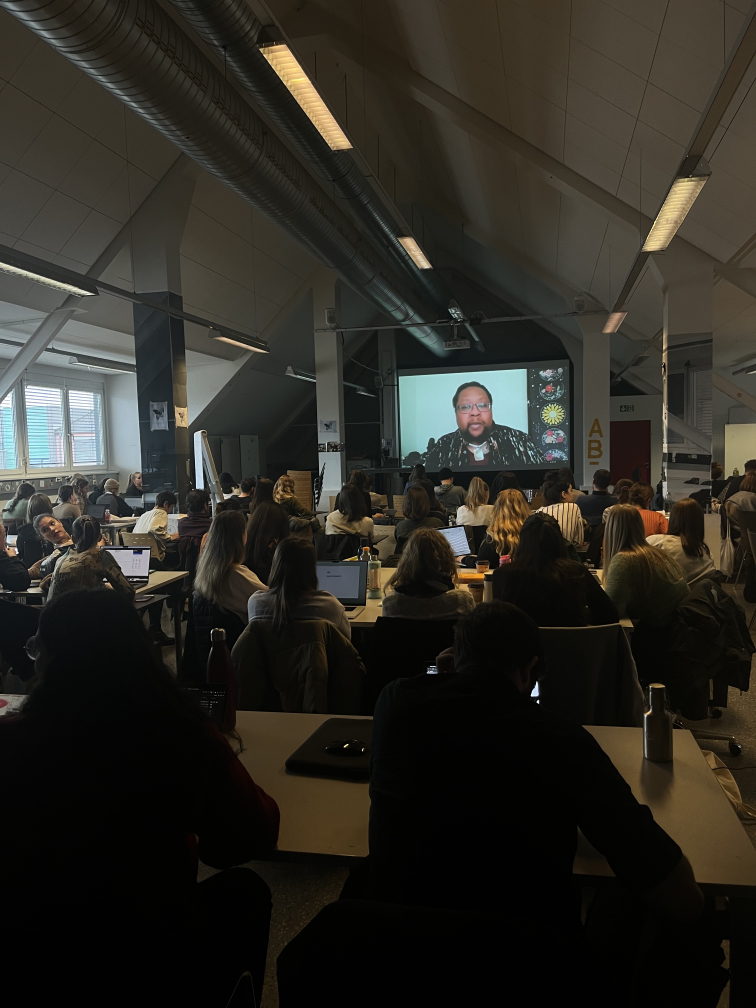
“Beyond the Bubble” – Dialogues at FH JOANNEUM University of Applied Sciences, Graz, Austria – 10 Nov


grazsent
 

A huge thanks to Birgit Bachler and participating students at FH JOANNEUM University of Applied Sciences in Graz, Austria for the invitation to speak yesterday, 10 November, in their lecture series, Beyond the Bubble. 

It was an opportunity to share different perspectives, realities & insights cross- and interculturally showing in educational, hands-on ways Natives/Indigenous persons are more than “bubblefied” stereotypes. 

That we can, do & even excel in many different fields, disciples, and have a variety of interests and skills. We can and often do talk about, enjoy & do things that are not directly Euro-assigned “Native/Indigenous” things. That practice is in itself stereotyping, limiting, compartmentalization. 

My Title: Beyond the Bubble – The Need for Variance.
“Recognizing and fulfilling the needs of adaptability and variance in harm free ways.”


Interested in learning more, have questions or queries as a speaker and other services?
Flying With Red Haircrow Productions, Cultural and Intercultural Competency & More. 
 

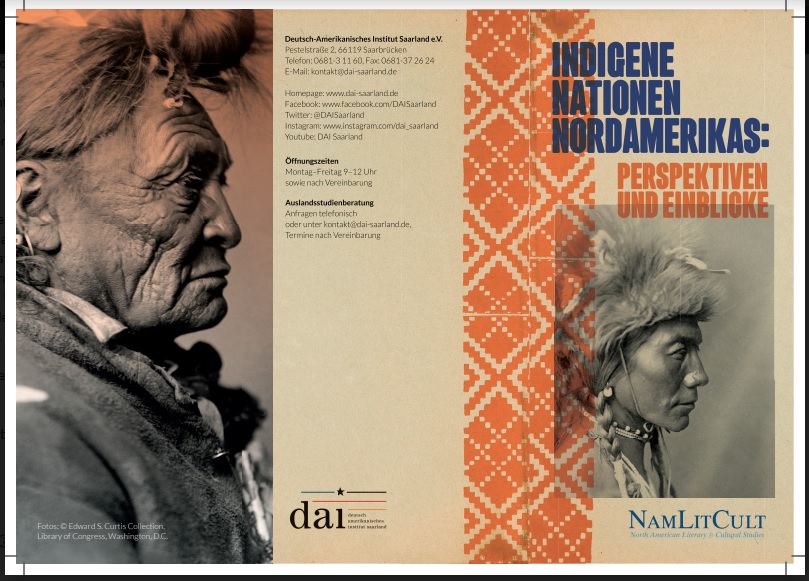
3 Nov in Saarland – Lecture: “Dismantling The Architecture and Refurbishment of Indigenous Trauma”

1


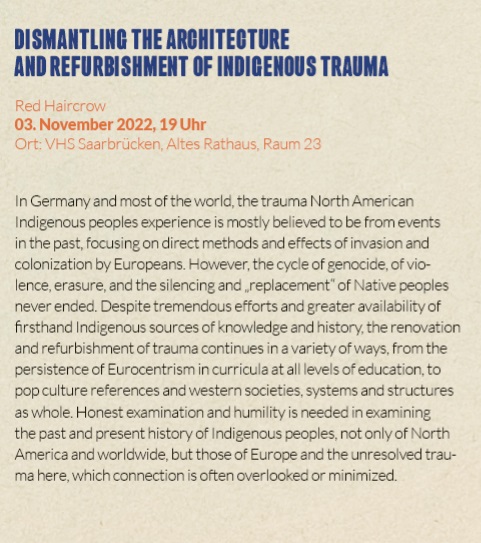
DISMANTLING THE ARCHITECTURE AND REFURBISHMENT OF INDIGENOUS TRAUMA by Red Haircrow
03. November 2022, 19 Uhr. Ort: VHS Saarbrücken, Altes Rathaus, Raum 23

“In Germany and most of the world, the trauma North American Indigenous peoples experience is mostly believed to be from events in the past, focusing on direct methods and effects of invasion and colonization by Europeans. However, the cycle of genocide, of violence, erasure, and the silencing and „replacement“ of Native peoples never ended.

Despite tremendous efforts and greater availability of firsthand Indigenous sources of knowledge and history, the renovation and refurbishment of trauma continues in a variety of ways, from the persistence of Eurocentrism in curricula at all levels of education, to pop culture references and western societies, systems and structures as whole. Honest examination and humility is needed in examining the past and present history of Indigenous peoples, not only of North America and worldwide, but those of Europe and the unresolved trauma here, which connection is often overlooked or minimized.”

2

“Two-Spirit” – Fiction, Facts & Misuse

There continues to be a lot of misinformation being shared about what “Two-Spirit” means, and Natives saying “No” are ignored just like when we say, stop cultural appropriation and misuse. Here’s the fact: if you are not Native/Indigenous, you are cannot be a Two-Spirit person and you should not be using the term to describe yourself or anyone else. It was a term created by Natives for Natives, and most Native nations and peoples have their terms in their languages also. The Dinéh (Navaho) refer to them as nàdleehé or ‘one who is ‘transformed’, the Lakota (Sioux) as winkte, the Mohave as alyha, the Zuni as lhamana, the Omaha as mexoga, the Aleut and Kodiak as achnucek, the Zapotec as ira’ muxe, etc.

My original post on the topic at redhaircrow.com was way back in 2010, “Two-Spirit-Tradition, History & Future”, so I wanted to do an updated version because my knowledge expanded also, from the wisdom of Native/Indigenous scholars, elders and elders-to-be. This is information I share and include in some workshops or presentations if applicable, or if someone asks about the term and its usage. Please recall all information on this and my personal website are our intellectual property, and require a written request for permission to reprint or use.

ts

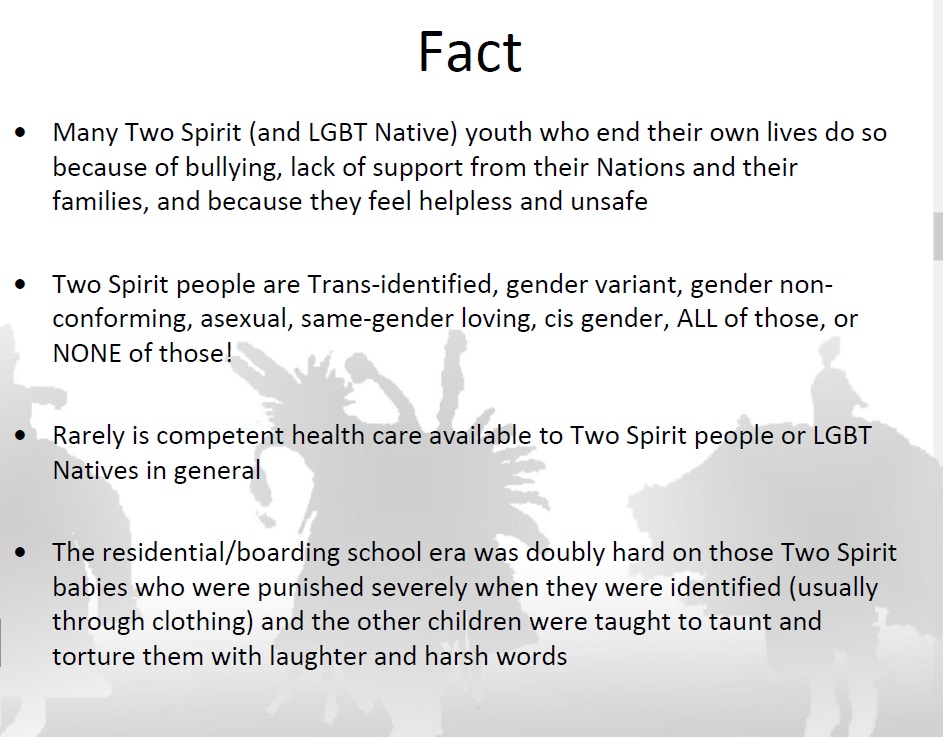
Recently, I shared links to the free manuscript proof of forthcoming, “Suicide Prevention in Indigenous Communities”, which I worked on with others this past summer for (NASEM), National Sciences Engineering Medicines Academies. It was almost totally ignored even by those who say they want to learn more about Natives. It’s a collection of firsthand information, data and knowledge from some of the hard-working Natives today, elders, academicians, psychologists, doctors. One of the greatest sections was on Two-Spirit people from Sadie Heart of the Hawk Ali, their presentation “Being Two-Spirit” can be downloaded from this online source.

Sadie sharing important knowledge, “Two-Spirit people are not only trans-identified, gender or sexually variant, gender queer, asexual or other terms. We are all of those and none of those because Two-Spirit is a **spiritual term** that reflects back on the roles our Two-Spirit ancestors used to have in relation to their Nations. Natives who identify as Two-Spirit know we have a responsibility to our Nations, to learn our languages, to keep our ceremonies and protect our children. This was the main work of Two-Spirit people prior to colonization.

Two-Spirit people understand the roles Two-Spirit ancestors had, and how when a child was born into a nation and there was evidence this child had an affinity for work that didn’t align with the gender they were identified with at birth, there was a celebration. There was a big celebration and a feast, it was not the negative response seen in parents today, that they will now never have grandchildren. In fact, if something happened to the parents of a child, the child was given to the Two-Spirit people to raise because rather than reducing that person to someone with a male and female spirit living in one body, there was a spiritual aspect as well. Many Native nations believe Two-Spirit people have one foot in the spirit world and one in the physical, being able to see things that others cannot. Two-Spirit people were considered sacred.

Contrary to stereotypes and pop culture, all Native people are not people of medicine, pipe carriers, lodge keepers and sun dancers, and medicine is more than sage, tobacco, sweetgrass, cedar and corn pollen. Today, Two-Spirit people are engaged in the work of our Two-Spirit ancestors working in medicine, in the arts, in psychology, in law, and other fields that lift our people up. Many are in behavioral health fields, and this is not a coincidence. Not all have completed their “coming-in” processes, but Two-Spirit people are around, they are in your communities trying to recreate the ways of our ancestors in every field.”

ts2ts3

Reality: Even for Native/Indigenous persons, just because they are LGBTIIQ, non-binary etc. it doesn’t automatically make them Two-Spirit. Native/Indigenous LGBTIIQ people can BECOME Two-Spirits, but it is not an automatic thing. Indigenous people from other continents and places ALSO had their terms and words for such persons, which they should be using also. For example, in Pasifika, Mahu (Hawai’i and Tahiti), Vaka sa lewa lewa (Fiji), Palopa (Papua New Guinea), Fa’afafine (Samoa), Akava’ine (Rarotonga).

Solutions: If you are “white”, European, etc. research your peoples culture and history and find the original terms for persons like yourself, or work together with your people or “adopted” peers to create a term for yourselves. Stop appropriating and misusing Native/Indigenous terms, cultures and traditions. Why does this keep needing to be said? Why are the collective voices of Native peoples being ignored?  The answers to those questions goes straight back to Eurocentrism, privilege and learned behaviors that excuse ignoring someone’s “No”, for one’s own gratification, even if its violating their rights, dignity and life. That’s why we say symbolically to #ForgetWinnetou, which helped spread that practice against Native peoples.


VS SMSee our call for submissions for a poetry, prose & art anthology celebrating variance relating to this topic, it’s called Varied Spirits. Writers, photographers and artists of any kind or level who identify as transgender, non-binary, gender non-conforming, gender-queer, trans-feminine, trans-masculine, mtf, ftm etc.) and Native/Indigenous persons who identify as two-spirit.

Description: “We live in societies designed to crush our bodies and spirits, that seek to compartmentalize and confine us in every way, especially into heteronormative roles and bodies although gender, sexuality, even intelligence are naturally on a spectrum.

Variance, the state of being varied, is often seen as negative. Yet skills such as adaptability and variability helped our ancestors survive, and today are essential in gaining and maintaining balance, well-being and mindfulness. Being trans and/or also part of other minoritized or marginalized groups adds extras challenges for being accepted as who you are, of just living your life, of feeling safe in society, in your home, in your body.”
16 & 17 November Workshop in Berlin – “Allyship “Righting History – How Historical Amnesia and Omission Fuels the New Rise of Normalized”

Symposium-Politics-of-Memories-and-Archives-1024x1024

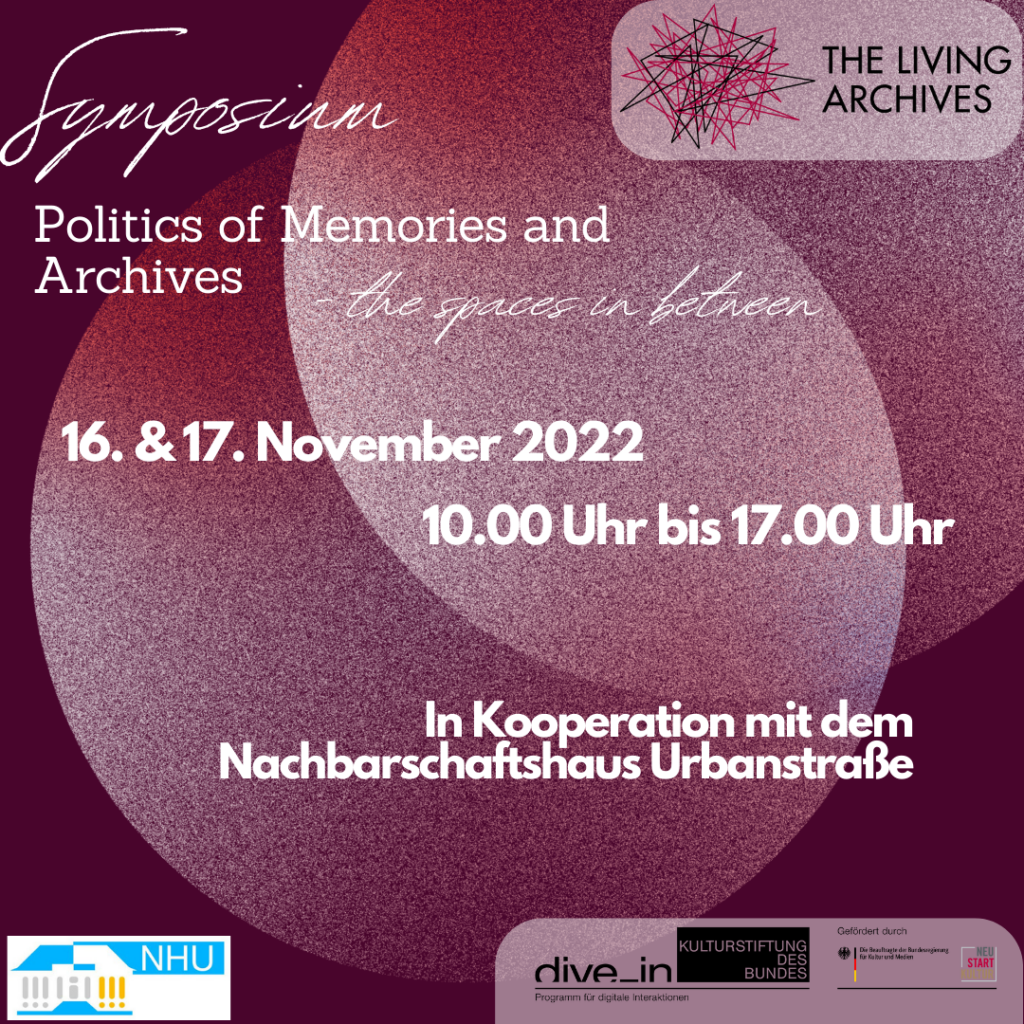
On 16 & 17 Nov, Red Haircrow will be doing workshops with xart splitta for “The Living Archives” and the topic Politics of Memories and Archives – the spaces in between.

The event will have both English and German segments. Register asap as space is limited as Covid19 precautions will be taken regarding personal distancing, etc.

Please visit their event announcement page for all details and the schedule for the two days of inspiring, enlightening & solidarity supporting gathering.


My Title: “Allyship “Righting History – How Historical Amnesia and Omission Fuels the New Rise of Normalized -Isms”.

Description: “The minimization or exclusion of the contributions, achievements and presence of women, non-Europeans and non-heteronormative people in history is common and also needs correction, but those omissions are more obvious.

However, the Eurocentrism in Western education systems and media also has another name most don’t associate with it and few “white people” recognize as such: white supremacist ideology. What are some of its forms, methods and tactics, and what can we do to right the wrongs written into the history of western society contributing to the current rise of hate, intolerance and ignorance.”


16./17. November ab 10 Uhr

Nachbarschaftshaus Urbanstraße

Diese Veranstaltung wird in-Präsenz, sowie digital stattfinden.
In deutscher und englischer Lautsprache, sowie deutscher Gebärdensprache mit Verdolmetschungen.


In Kooperation mit dem Nachbarschaftshaus Urbanstraße.

The Living Archives ist eine online Plattform zur Dokumentation, Archivierung und Weitergabe von Wissen aus und für BIPoC Communities. Es ist ein intersektionales, dekoloniales resistant-knowledge Projekt, durch und für BIPoC-Communities. Ziel ist es gebündelt (verlorene und/oder gelöschte) Inhalte und Wissen, das innerhalb von BIPoC Kontexten generiert wird/wurde, festzuhalten und für diese Communities wieder zugänglich zu machen.


An diesen zwei November Tagen wollen wir uns gemeinsame mit Fragen um die Herstellung und Sicherung von Wissen sowie dem bewegungspolitischem aktivistischem Erinnern widmen. 

Mit Keynotes, Panels sowie Workshops werden wir uns gemeinsam mit dekolonialen Wissens(re)produktionen und Politiken des Erinnerns auseinandersetzen. Die Prozesse um Wissen über intersektionale Diskriminierung bzw. über Lebensrealitäten, welche von der Norm abweichen, das Erinnern aktivistischer Kämpfe, Personen oder Orte sind grundlegend von struktureller Auslöschung betroffen oder werden in ihrer Existenzberechtigung an den Ränder der Gesellschaft gedrängt. Wir werden uns deswegen gemeinsam in die Zwischenräume begeben. Zwischenräume, in welchen unsere Geschichten erhalten und weitergegeben werden so das wir uns nun mit unseren widerständigen Prozessen aus den gesellschaftlichen Nischen und digitalen Subräumen heraus ausdehnen können.

Programm:

16. November

10.00h Ankommen
10.30h Begrüßung
11.00h Keynote “Black Deaf History” von Vincent Hesse (DGS)
11.45h Mittag
12.45h Panelgespräch “Verwoben mit Verwobene Geschichten – erinnerungspolitischer Aktivismus in digitalen Plattformen” mit Iris Rajanayagam, Juliana Kolberg und Latifa Hahn (Deutsche Lautsprache)
14.00h Workshop Phase I
Workshop 1: “EXPECT BIPOC_ism” mit Adetoun Küppers-Adebisi (Deutsche Lautsprache)
Workshop 2: Allyship “Righting History – How Historical Amnesia and Omission Fuels the New Rise of Normalized -Isms” mit Red Haircrow (English spoken language)
16.00h Netzwerk Austausch und Ausklang

17. November

10.00h Ankommen
10.30h Workshop Phase II (gleiche Gruppen und Workshops des ersten Tages)
12.30h Mittag
13.30h Panel “Deine, Meine, Unsere Erinnerungen” mit Nataly Jung-Hwa Han, Kenan Emini, Bahar Sanli und Juliana Kolberg (Deutsche Lautsprache)
15.00h Launch & Keynote “TRANCE” mit Sea Novaa (English spoken language)
16.00h Performance

Weitere Informationen über zu den Workshops und den Referent*innen.
Der öffentliche Teil der Veranstaltung wird simultan in deutscher und englischer Lautsprache und deutscher Gebärdensprache verdolmetscht. Die Workshops werden unterschiedlich verdolmetscht, weitere Informationen findet ihr bei den jeweiligen Workshopsbeschreibungen.

Anmeldung:
Die Teilnahme an der Veranstaltung ist nur mit vorheriger Anmeldung möglich. Manche Workshops sind als Safer Spaces konzipiert und nur für BIPoC zugänglich. Die Teilnehmer*innenzahl ist begrenzt. Menschen mit Diskriminierungserfahrungen werden in der Anmeldung bevorzugt.

Anmeldungen bitte bis Freitag, den 09.11.2022 an contact@xartsplitta.net.

Es wäre toll, wenn ihr bei eurer Anmeldung zu folgenden Punkten etwas schreiben würdet:

  • An welchem Workshop möchtest du teilnehmen?
  • Warum hast du dich für die Teilnahme an dem Workshop entschieden?
  • Auf welche Weise hast du dich bisher mit dem Thema beschäftigt?
  • Hast du Bedürfnisse oder brauchst du zur Teilnahme Unterstützung (z.b. Kinder Betreuung oder Sprachassistenz etc)?
  • Möchtest du online oder in-Präsenz teilnehmen

Remembering a special discussion at Brandeis University: “Modern #Germany’s #CognitiveDissonance on #Racism and its Roots in Karl May’s Legacy”

From the Brandeis University webpage of German and European Studies. The entire recording of the event can also be viewed on their site by visiting this link.

German Writers and Race: Modern Germany’s Cognitive Dissonance on Racism and its Roots in Karl May’s Legacy

In cooperation with the Department of Anthropology and the Department of Women’s, Gender, and Sexuality Studies at Brandeis University

Monday, November 30, 2020
12-1:30 pm Eastern Time (US) / 6-7:30 pm German time
Zoom Webinar 

About the Event

Most Americans don’t know who Karl May is, and Germans no longer read his “American Indian” fiction that once inspired generations. Fewer still connect its legacy to persistent “acceptable” racism in all facets of German society, despite research clearly linking the stereotyping of “Others” to the rise of Eurocentrism, normalized intolerance and white supremacist ideology in Western society.  

Current situations regarding racism and cultural appropriation may have sprung from May’s seeds, but the sproutlings were grafted onto pre-existing trees. 

About the Film

“What does a world that respects Indigenous peoples look like, that’s working towards ending racism, colonialism, and other intersecting oppression on a global scale?” -Marcos, 2017

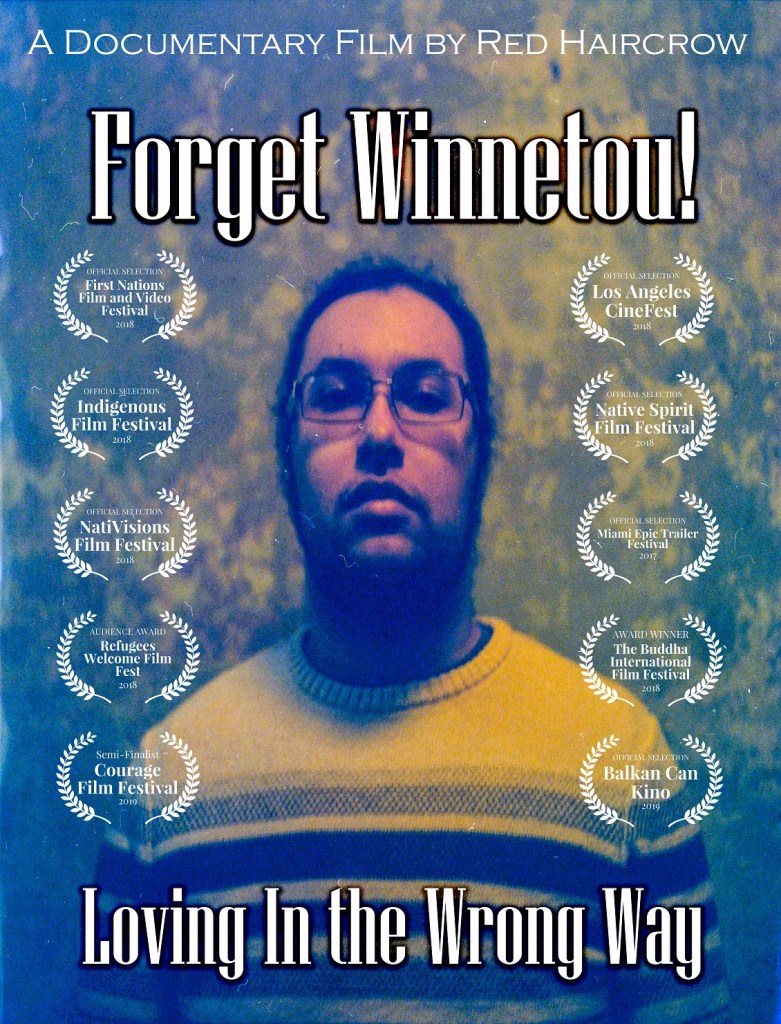
Forget Winnetou! is a documentary film project directed by Red Haircrow, on stereotypes of Native Americans in Germany, and how it is connected to wider issues of stereotyping, racial profiling and inequality towards all people of color throughout Europe and western society. We understand Winnetou, the fictional “Indian” character created by Karl May, who many Germans see as harmless and inspiring, can be a symbolic character/story reinforcing Native American stereotypes, and racism & colonialism in general.

While recognizing many Germans were first introduced to “natives” through May’s stories, developing a lifelong love of the characters, in combination with misinformation and Eurocentric or one-dimensional material in German society, a great imbalance has continued. A situation of “Loving in the wrong way”. For generations it has reinforced the attitude that Europeans can take whatever and whoever they want, even living peoples, and misinterpret and use them for self-gratification. We live in a world heavily damaged by those such practices and attitudes.

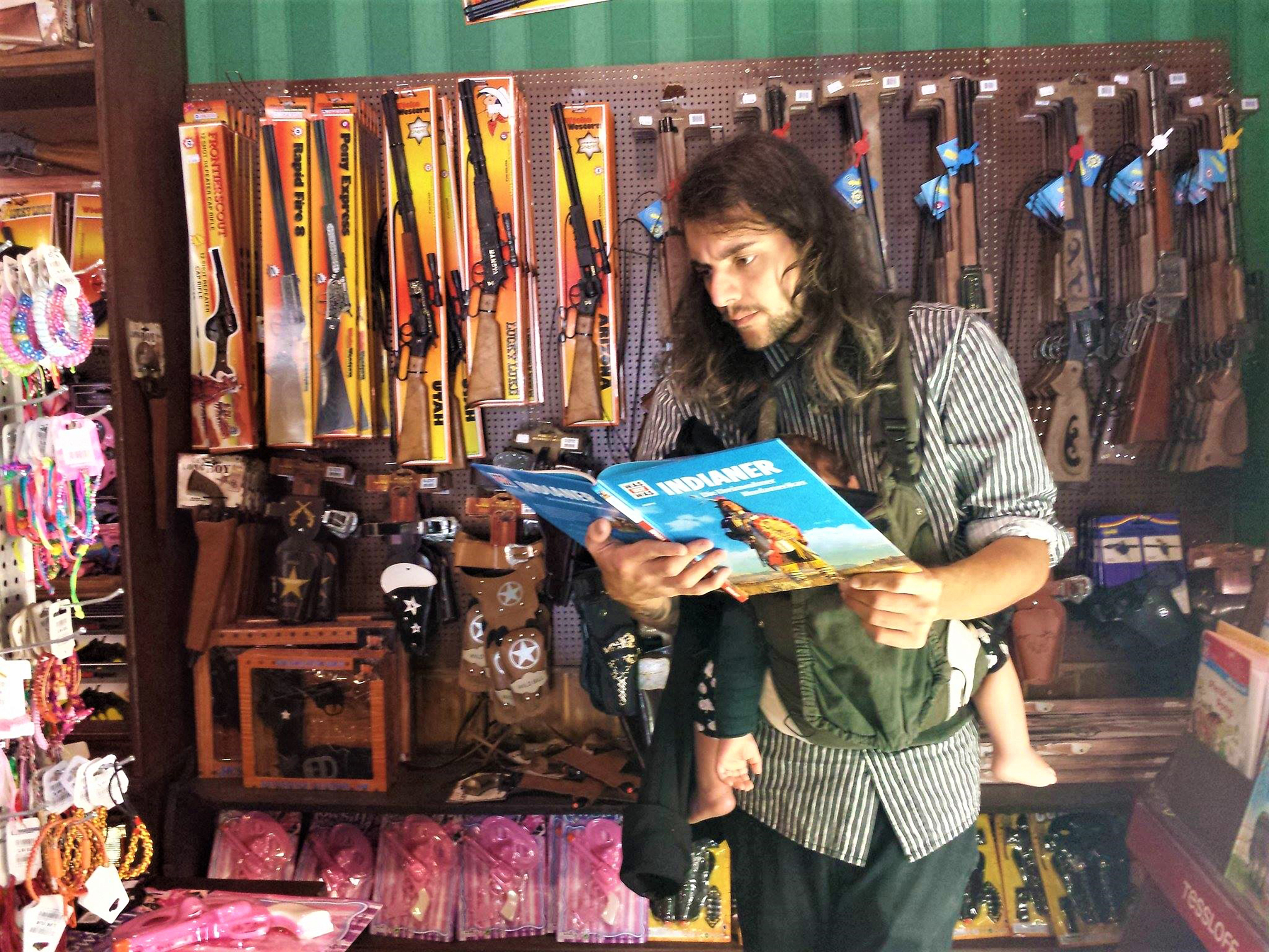
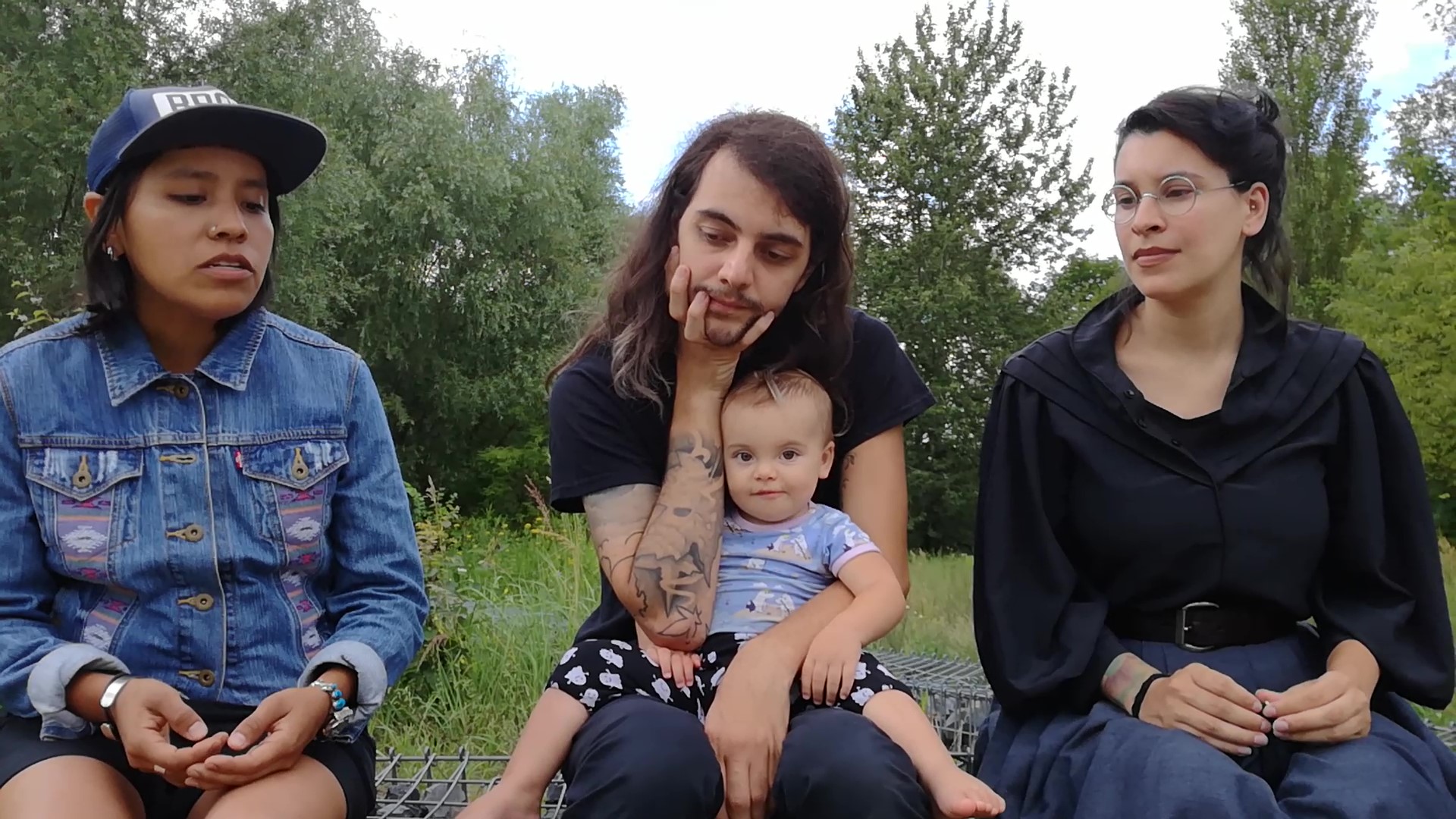
Still from the movie "Forget Winnetou"

We are asking Germany and the world to understand the very real effects of dismissive attitudes towards stereotyping, especially their effect on the young, and the misuse of Native identity and cultures. We want to help support and expand intercultural connections and correct the imbalances through accurate knowledge, and letting Natives represent and present themselves. We want Natives in North America to know and understand the depth of fetishization and exotification that occurs, although not always intentional, results in further objectification, dehumanization and erasure at the heart of so many issues, from daily discrimination to repatriation denials.

Still from the movie "Forget Winnetou"Germany is a microcosm of serious issues in western society: of increasingly blatant racism, xenophobia, and intolerance strengthened by strategically omitted or white-washed history involving people of color. We’ll show this through the lives and stories of Native Americans in their own words and experiences. We feel our documentary can be a learning experience introducing or furthering the process of decolonization and intercultural respect by inspiring viewers to ask themselves and hopefully realize, how beliefs, attitudes and practices they believe harmless are part of systemic racism that continues to oppress and divide. (Source: Vtape)
After you RSVP for the event (see link at top of the page), you will receive access information for watching the film prior to the event.

About the Speaker

D.S Red Haircrow is a writer, educator, psychologist and filmmaker of Native American (Chiricahua-Apache / Cherokee) and African American descent. They hold a Bachelor’s of Science in Psychology and a Master’s in Native American Studies from the University of Montana Bozeman, and their work has been featured in journals, magazines, and exhibitions around the world. Their research interests include intergenerational historical trauma, autistic spectrum disorder, GLBTIIQ needs, and suicide prevention. Current projects include an educational RPG video game focusing on world Indigenous groups, continuation of research on stigma and prejudice related to mental disorders and conditions such as ASD, and the short documentary on these topics: ALMOST.

Various trailers and related excerpts from the film can be found here: https://vimeo.com/redhaircrow

31 Okt 2022 – “People of Colour” #POC – ein Gespräch über die Geschichte von Solidaritäten

Shared via xart splitta
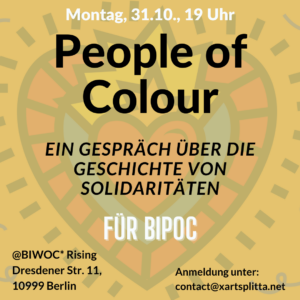
Titel der Veranstaltung und Informationen zum Ort und Anmeldung sind abgebildet. Im Hintergrund eine Zeichnung eines Herzens unterlegt in Orange.

Montag, 31. Oktober 2022

19 Uhr, bei BIWOC* Rising

Dresdener Str. 11, 10999 Berlin

Die aktuelle Bedeutung von People of Colour prägte sich in den USA mit der Entstehung der Black-Power-Bewegung in den späten 1960er Jahren. Der Begriff sollte eine Gruppe an Menschen in ihren Kämpfen gegen rassistische Unterdrückung und in Absetzung zum Weißsein, solidarisch zusammenbringen. In den 1980/1990er Jahren wurde “People of Colour” in Deutschland in der diasporischen Bewegung aufgenommen. Seit dem bis heute haben wir die unterschiedlichsten Bezugspunkte zu dieser Selbstidentifikation entstehen lassen. Einiges an Mehrschichtigkeit ist notwendig, anderes durch Übersetzungsfehler oder Tokenism entfremdet. Im Rahmen von #CommunitiesSolidarischDenken beschäftigen wir uns dieses Jahr mit dieser Solidaritätskategorie und möchten hierfür Kontext schaffen.

Gemeinsam mit den Teilnehmer*innen der Fokusgruppe korientationBIWOC* Rising, dem RomaniPhen Archiv, May Zeidani Yufanyi, Red Haircrow und unserem Vorstand Saideh Saadat-Lendle und Iman Attia wollen wir am 31.10., ab 19 Uhr zu BIWOC* Rising einladen.

Mit euren Fragen und in einem offenen Gespräch im safer space möchten wir Geschichten teilen und uns bewegungspolitisch Erinnern mit den Aktivist*innen, die das Aufkommen von People of Colour beobachtet und selbst begleitet haben in Deutschland.

Diese Veranstaltung ist eine Einladung an BIPoC.
Bitte schreibt uns bei der Anmeldung einige Worte zu euch.
Es gibt eine begrenzte TN-Zahl, daher meldet euch bis 24.10. unter contact@xartsplitta.net an.

Informationen zu den Gesprächspartner*innen folgen in Kürze.

Die Illustration im Hintergrund ist von Jasmina El Bouamraoui @el.boum und Karabo Poppy Moletsane @karabo_poppy.

Be ready for November #NativeAmerican Heritage Month! Order our Award-winning #Documentary now for your orgs, university & school #filmscreenings

Order now to screen our award-winning documentary on the origin and effects of Native American stereotypes, just in time for November, which is Native American Heritage month. It is a documentary intended for audiences 12 and older, and has screened to positive reception at universities, gymnasiums, organizations and groups who are interested in helping create a better world and future for all peoples.

And we’re not a niché film nor an analysis of Karl May’s work! We leave that to the same demographic continuing to defend racist and sexist materials and romanticizing literature in which white supremacist ideology, misappropriation and Eurocentrism was common, no matter how nicely written.

Our film focuses on how the same mentality that ignores Indigenous rights to self-representation are often those who stereotype and gaslight GLBTIIQ people, women, the disabled or economically challenged, especially people of color just for desiring change and equality. It is basically saying, “My gratification is more important than your dignity, your rights or even your life.” This is a main facet of rape culture. It is intersecting oppression. 

How do we go forward together in a better way? Watch the trailer here, and previous clips from production.

WAYS TO WATCH!

  • Available with German or English subtitles.
  • Opportunities for Classroom, Campus, Organization & Library Screenings

  • If you are interested in also having Virtual or In-person panels with Filmmakers & Film Participants, please contact us via our form, which can be found on our FAQs page.
  • Streaming & Digital Site License Options – Please contact VTAPE, our Canadian based artist run distributer, to arrange your rental copy and/or screening copy. There are only a few DVD copies left for private use, but we hope to offer a streaming option for inviduals in the near future.

On Poverty Porn & “Voyeurs” of Native Peoples and Cultures – A New Excerpt from “#ForgetWinnetou! Loving in the Wrong Way”


A new excerpt using raw footage from our documentary on poverty porn and the voyeuristic quality of European, but especially German “observation” and misrepresentation of Native American cultures and peoples.

The willful stereotyping of Indigenous peoples and the racism, white supremacist ideology and especially the patriarchy utilized when those from the demographic which gained power through violence, genocide and exploitation of others believe they have the continued right over other peoples bodies, stories and narratives. They use systematic racist and sexist structures in industry and society created by those just like themselves, to continue to erase, replace and/or misrepresent/misuse other marginalized and minoritized peoples and groups.

It’s a deep societal problem that doesn’t just affect Natives. This is not a niche film or issue. The mentality that not only practices but defends the minimization, erasure and silencing of certain groups or peoples, is a widespread problem at the root of most every disaster, crisis and issue facing our world today. It’s at the root of imperialism, capitalism, climate crisis, consumerism and violation of rights of all kinds, past and present. We do not want it to be our future. We all should be committed to ending such practices, “protected status” and privilege right now. 

That’s why we say, “This is not about Winnetou. It’s about you and us. ALL of us.” That’s why we say it is far past time to symbolically unlearn and forget Winnetou, and all the practices, the behaviors, mindsets and value(less) systems that promote erasure, exploitation, fetishization and appropriation. 


Dialogue from the film: “It’s an unfortunate aspect of capitalism and white supremacy that people end up in a job they don’t necessarily like or exploiting parts of their identity that they would rather not but that’s how you survive. I often downplayed my (Native) identity and didn’t talk about it because I didn’t want to be forced to perform myself to be consumed by white Germans.

Unfortunately, that’s one of the only ways you can make money in Germany, and in Berlin especially. I met many people that all of the things they’d done and all the things they were became a marketing strategy to perform personal tragedies, migration stories, or poverty porn for Germans who consumed it because it made them feel like they’re open-minded, liberal and understanding of other people when they’re voyeurs basically.

I feel like one of the first important things to do is remove the emphasis on spectacle. If your only interaction and the way you interact with others is primarily through spectacle then it’s a very privileged position. It’s very focused, it’s pretty one way. It doesn’t have complexity. I feel that’s the starting point for people being able to interact with Native peoples, and people not like themselves in general.”

Our documentary is available on DVD for private use, but there’s only 25 copies now left in our stock! Once they’re gone, they’re gone.

Organizations, institutes, universities, etc. are encouraged to contact VTape, the non-profit artist run distribution company based in Canada, which can provide screening and institutional copies for rent or purchase.

We have continued to search for a European or especially a German distributor or studio to broadcast, but no matter how open-minded, diversity conscious and anti-racist many claim to be, we’ve not been able to find one despite our award-winning status and social justice, human rights contentiousness of our film.