Shared from original post at redhaircrow.com, yet another reason why Indigenous Knowledge and History is World History. It’s all the things that have been deliberately omitted or heavily loaded with Eurocentrism, strategically written with heroize acts of aggression, invasion and colonization.
“Throughout history, a country’s economic and military strength has influenced its times of cultural splendor and the rise of famous intellectuals and artists. Spain has been an exception to this. At the turn of the 20th century, a surprising series of events that no one could have predicted occurred. At the time, Spain had recently lost the last of its overseas colonies.”
From (link) “On The Modern School of Francisco Ferrer i Guàrdia (1859–1909), an International and Current Figure” by Carme Garcia-Yeste, Gisela Redondo-Sama, Maria Padrós & Patricia Melgar (2016). The careful wording on the topic immediately caught my eye, because it was the usual Eurocentric erasure of genocide of indigenous peoples.
“The loss of the last of its overseas colonies”…. crooned the text, but the Spanish invaded, raped, pillaged, murdered then occupied areas around the world. Many were pedophiles and torturers who committed unbelievably horrific acts of brutality to subdue and control the enslaved and exploited peoples, and yet like Christopher Columbus, were whitewashed and hailed as brave explorers and intrepid travelers.
After enormous loss, the Indigenous peoples such as in the Philippines, finally overthrew the Spanish invaders with the help of the USA, who immediately betrayed them. They are still, over a hundred years later, working to decolonize their minds, bodies and lands, and regain their rightful situation of self-determination from the Euro-serving figureheads in power. They’re are still tallying the totals of what was stolen from them. It is without measure, but with the resilience that is inherent, many are in the process of resurgence and revitalization.
In the case of this research paper, this reality is glossed over to highlight the struggle of another group from within the Spanish population. While the research paper lovingly details the struggles of common Spanish citizens against the privileged class, they utterly ignored how Spain has benefited from the genocide of others, especially people of color. It is with great irony, looking around at all the rich cathedrals and bank coffers full of billions plundered from colonies, that many people of color describe Spain as the most racist European country. Except for a few white Americans, since I’ve been in Germany, I’ve actually never been openly called a racist term or slur, except by Spaniards.
Of course, a single research paper cannot encompass all materials and perspectives, but in the writing that is included, there shouldn’t be this continual erasure and minimization of European colonial brutality. It continues historical amnesia and reinforces the many fabrications, twisting of facts or hiding of truth that is taught in European schools about colonialism. Naturally, this produced generations who doubt actual truth, because they have been so thoroughly deceived by their own systems. Some wish you to educate them, although that should be their own responsibility. They need to do that work themselves first, without expectation that POC should drop info on their command or expectation.
Also, this all lends itself to pity wars, the “my struggle is harder than yours!” cries so often espoused by white European feminists, gays or a younger generation that has carefully been coddled by “PC” or politically correct labels that omitted any of the harsher, bigoted realities of the world. Realities that, past and present, People of Color, including little children, have to deal with everyday. That Indigenous peoples have to live with, the scars on their minds, bodies and lands, including those of Europe.
The sympathetic hero-izing of the European, singular or collective in literature, in film, in museums, in every facet of western society, and the total omission of the brutality, the enslavement or even obliteration of the Indigenous, the “Other”.
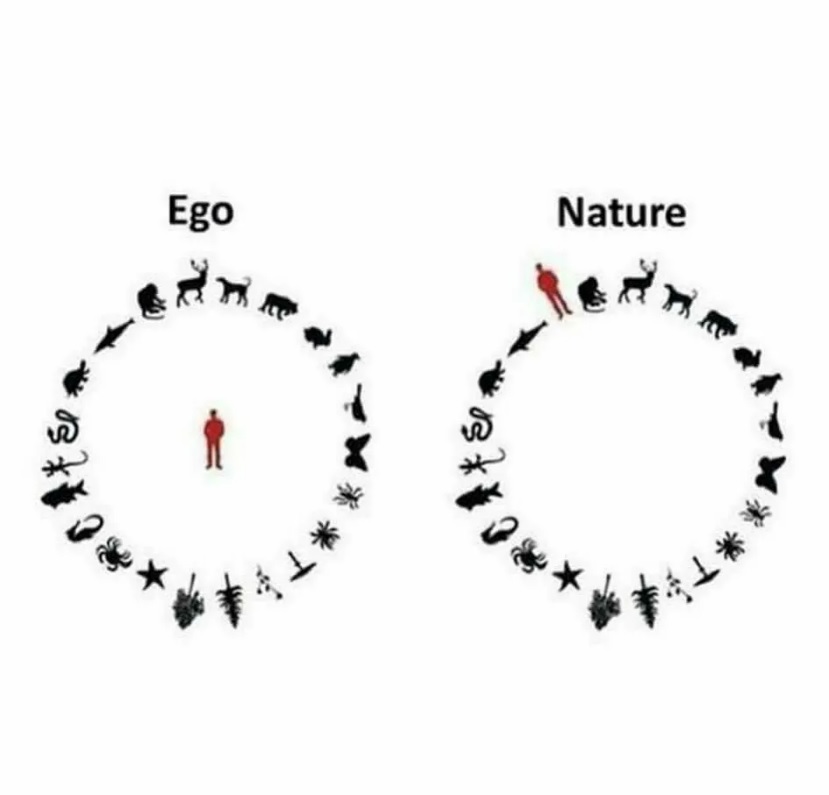
That these primarily white Europeans perpetuate the created patriarchal, ableist model in their appropriation, minimization and/or passive/aggressive resentment of people of color and their cultures, sometimes accompanied by antagonism and derision? It’s frustrating. It’s exhausting. It’s maddening to deal with, especially when they’re still trying to achieve a pinnacle for acceptance, validation, and yes, vindictive vindication over all others, using methods they claim to be rejecting. Or when they want you to support/join/help them when they don’t respect/understand/care about you, and may actually minimize the struggles of POC who share their same issues. Whether it is women’s issues, a disability or whatever, POC deal with those IN ADDITION to discrimination simply on the color of their skin. Western society’s perpetual centering of self is very different from the encompassing circle so often seen in Indigenous cultures anywhere in the world, including those in Europe.
Although I mention appropriation, it is no surprise that some Europeans wish to escape from the families, peer groups, societies and pseudo-cultures where self-gratification and -centeredness is the norm. They seek to find belonging in the beliefs, ceremonies and traditions of other cultures, but too often because of learning colonial behaviors and practices, (link) they “love” in a wrong way. They did not learn empathy. They were not taught. Being empathetic does not serve them in western society, their societies. They were unfortunately imbued with privilege and entitlement to take and use whatever and whomever they want. They didn’t learn that such practices and mindsets also harm them and the environment.
It’s no wonder so many are prone to self-medication and vice, simply because they are hungry and thirsty for true connection and acceptance from others. They are searching for meaning, and want to be believe in something, yet learning to and experiencing trust is all too often non-existent as well. And then on top of it all, to be told, “That’s just the way the world is! Some will always be rich, and others will be poor. Some will always get hurt, be upset, or deprived by your doing whatever is necessary to succeed…but you deserve it!” How cruel and unnatural. This is trauma informed, fear based paranoia. The rationalization of unhealed, untreated pain.
This kind of attitude and teaching makes people cruel to others. We see this casual cruelty daily, everywhere you look, but some of us also see the empty eyes and spirits. I see this very much in Germany, but am also thankful to see those trying to live in a good way, to right the many historical wrongs, and who do so with all their hearts. This is also another example how only using European and Eurocentric material continues to spread the centering of any European knowledge and history above all others, creating and reinforcing layer upon layer of resentment, delusion and un/imbalance in the world. It makes cultural appropriation, exploitation and capitalistic endeavors the “lesser” of evils, when they are all part of the cycle of genocide.
Not sure of the others, but the “Cycle of Genocide” image was created by Ižaŋžaŋwiŋ. Learn more by purchasing your copy of “Forget Winnetou! Loving in the Wrong Way.”
Sorry! This product is not available for purchase at this time.




 Two of my poems, “The Color of Your Skin” and “Threatened by Beads” are included in this anthology of essays, art, poetry and more. First appearing in Red Ink International Journal’s special issue, Standing With Standing Rock (December 2016), my work was translated to German for this edition of Neue Rundschau, published by S. Fischer Verlag.
 Forget Winnetou! Loving in the Wrong Way
You must be logged in to post a comment.